
The Rocky Horror Picture Show (1975) (TRHPS) has spawned a fan culture unlike any seen before or since. TRHPS, which began its life as a stage play before being adapted to film, is a movie musical that follows Brad and Janet, a recently engaged and sexually repressed couple, who find themselves trapped in a castle with a group of strange, sexually liberated inhabitants, mainly Dr. Frank-N-Furter—mad scientist and self-described “sweet transvestite”—and his various henchmen, supporters and Frankensteinian creations. The film pays homage to classic Sci-Fi and horror B-movies while also drawing inspiration from 60s rock-n-roll and glam rock of the 70s. It’s no shock that a film like this would develop such a fanatical following.
But the film wasn’t always so well-received. It initially struggled to find success when it debuted, and was even pulled from theaters due to poor ticket sales. In 1976, the Waverly Theater in New York City, which was known for its frequent midnight screenings, decided to make TRHPS its midnight movie. From that, the film’s following grew and the ritualistic behavior surrounding it evolved into the practice of “shadow casting” and “call-outs” which it’s known for today.
Los Angeles happens to be the home of one of the longest-running TRHPS shadow casts in the U.S. The Landmark Nuart’s Sins O’ The Flesh shadow cast (the “of” without the F because, according to the many emcees I encountered in my fieldwork, they “leave the F for you”) has been performing every Saturday since 1987. I attended three shows to learn about contemporary practices in midnight shadow cast screenings.
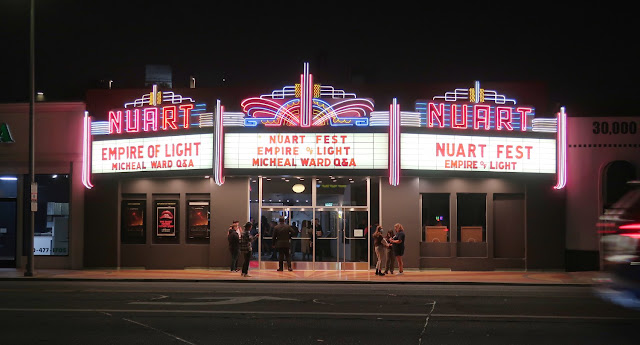
While the show began at 11:30 p.m., I arrived at each showing at around 11:00 p.m. The Nuart Theatre, situated in Santa Monica next door to a retro video rental store, looks like your typical old-fashioned, one-screen theater, but the experiences I had there were anything but typical.
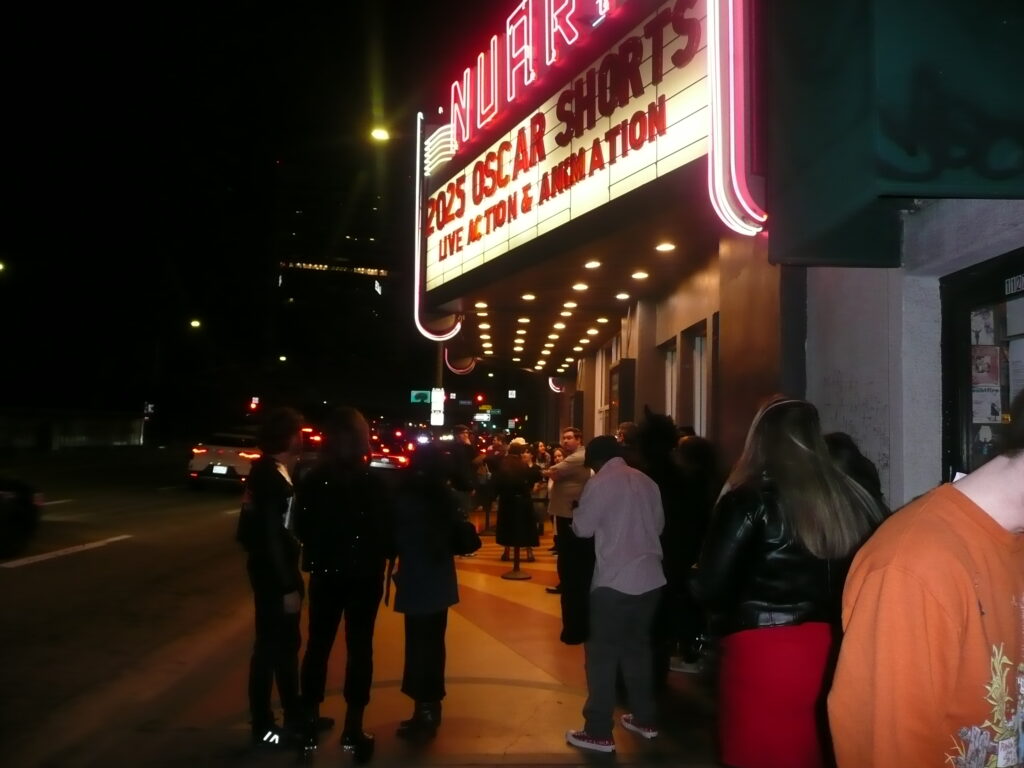
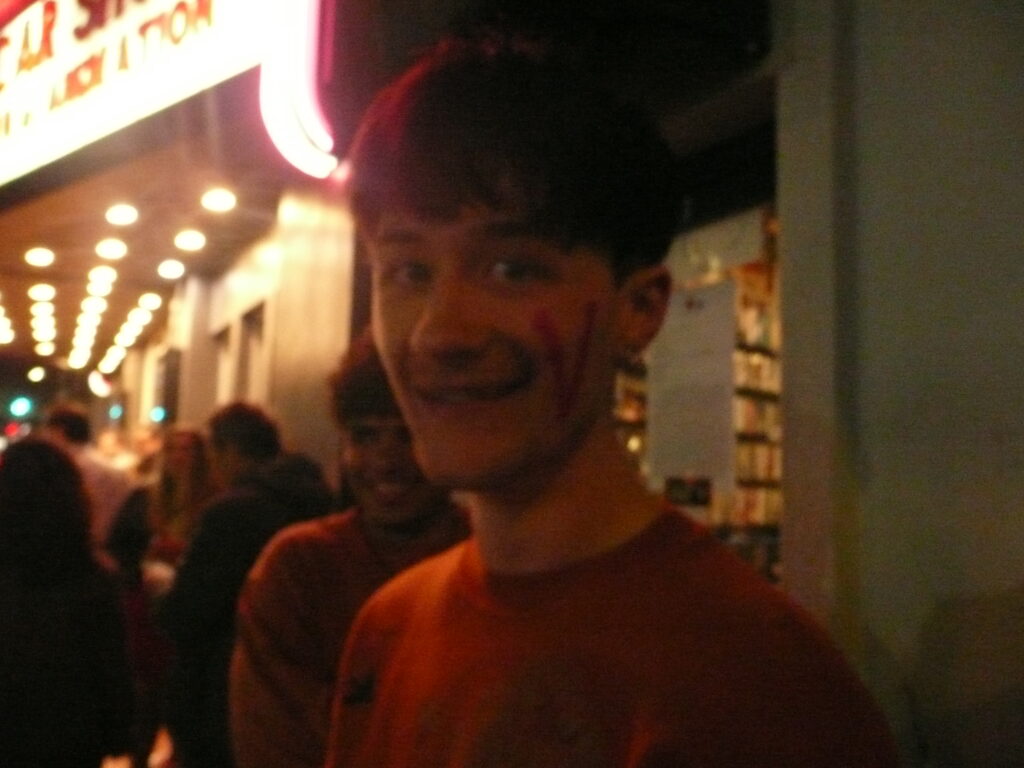
Upon arrival, there’d already be a line of eager fans waiting. Before allowing us in, a person who identified themself as the “emcee” went to everyone in the line and asked if they had seen the film before. Each time I went, I was accompanied by at least one person who hadn’t been before, and they were marked with a red lipstick V for “virgin” on their face. I noticed more scantily-clad “virgins” had phrases like “slut” and “bitch” written across their chests. After the emcee finished marking “virgins,” we had our bags checked for any weapons, drugs, alcohol or outside food, and our tickets scanned by a bouncer. Each time I went, the bouncer was the same, a man in a bulletproof vest adorned with patches.
The Prop Kit
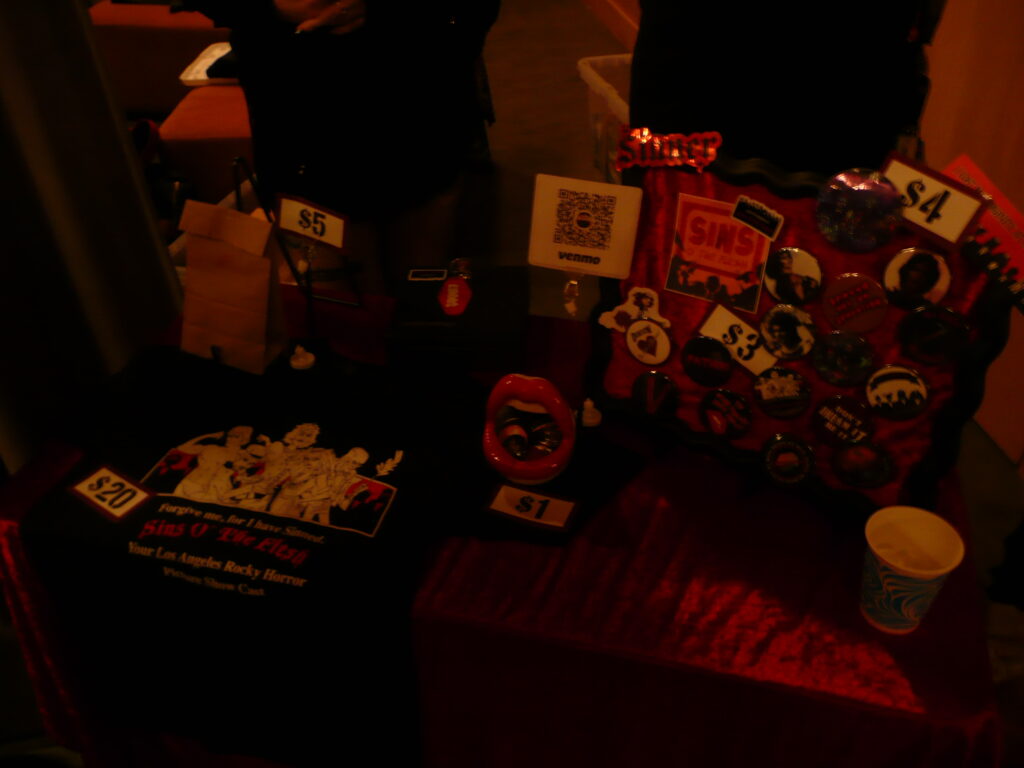
Now inside, I was directed to a table which sold merchandise such as t-shirts, pin-back buttons and, more importantly, prop kits for $5. The prop kit is a necessary part of the TRHPS experience. The following items in the kit are intended for use during the film:
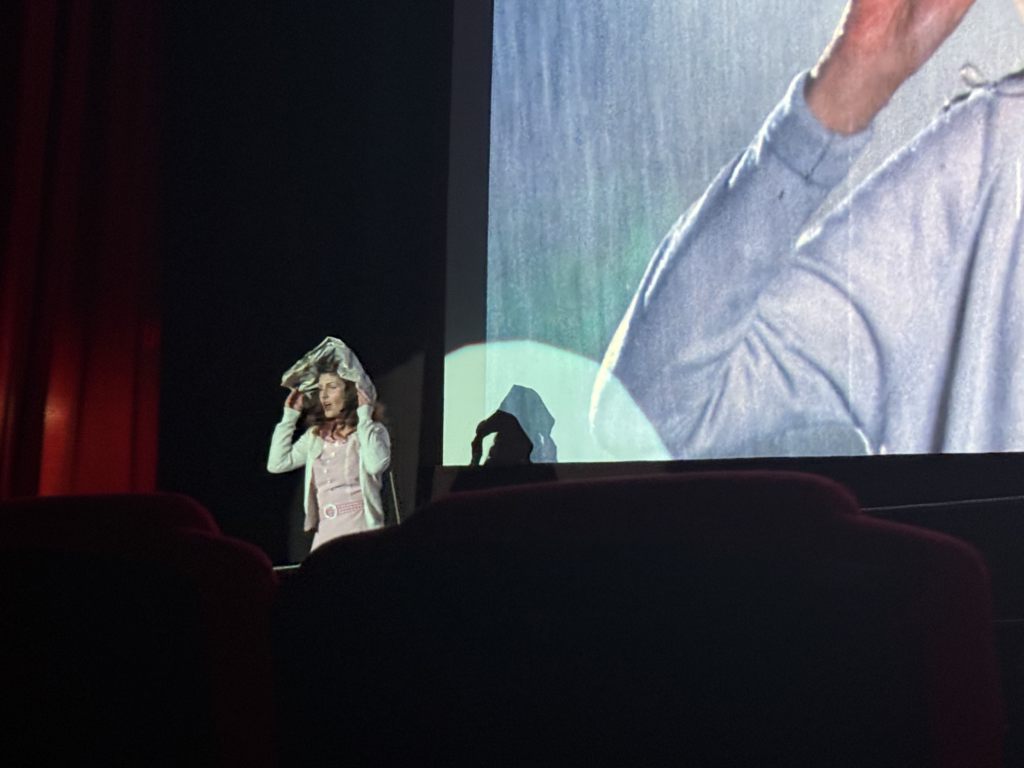
- A newspaper, to be worn during the song “Over at the Frankenstein Place” when Janet covers her hair with a newspaper.
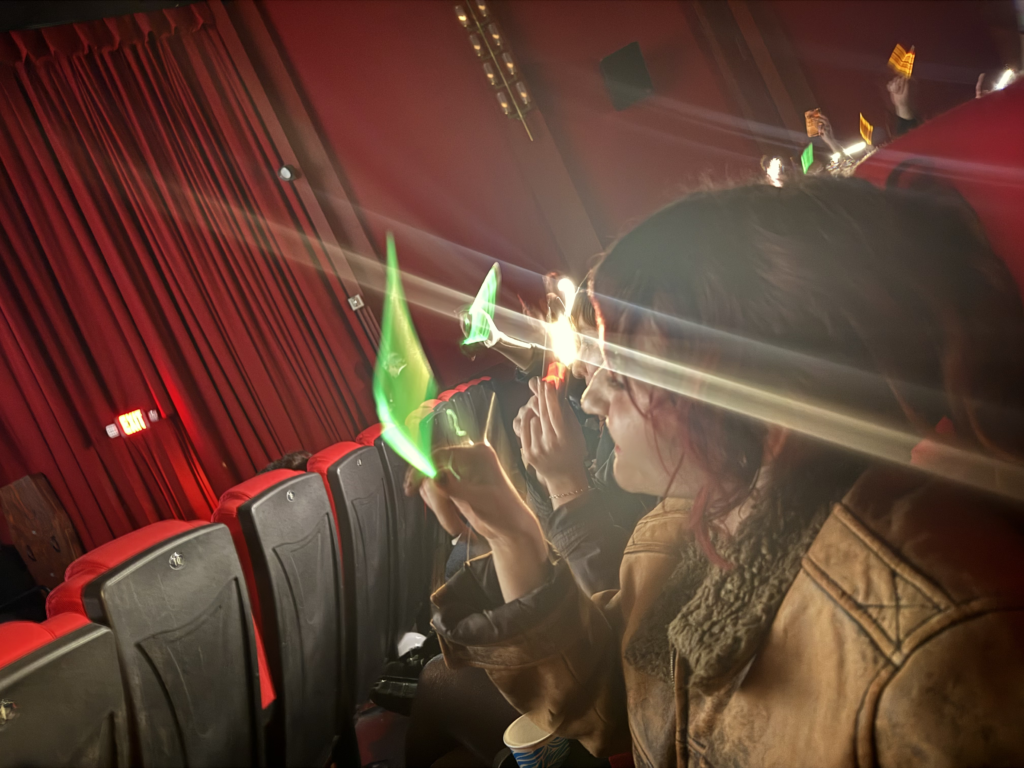
- A glow stick, to be held up during the song “Over at the Frankenstein Place” when the line, “There’s a light” is sung.
- A latex glove, to be snapped when Dr. Frank-N-Furter snaps his.
- A noisemaker, to be blown during the “creation” scene when the Transylvanians blow theirs.
- Confetti, to be thrown during Dr. Frank-N-Furter and Rocky’s wedding.
- A balloon, to be popped when Janet orgasms.
- Toilet paper, to be thrown when Dr. Scott breaks a wall with his wheelchair.
- Cards, to be thrown during the song “I’m Going Home” when Dr. Frank-N-Furter sings the line, “Cards for sorrow, cards for pain.”
This prop kit phenomenon is not unique to TRHPS and is also common in midnight screenings of Tommy Wiseau’s The Room (2003), in which movie-goers bring plastic spoons to throw whenever spoons appear in the film.
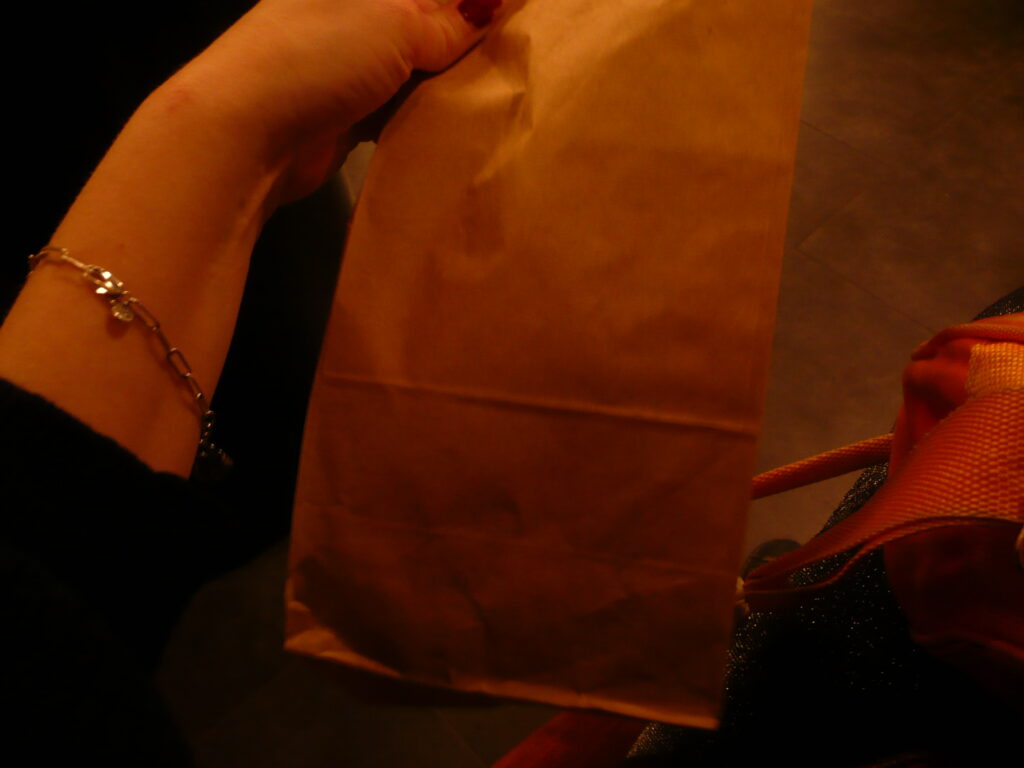
After acquiring my prop kit, I’d make my way into the screening room and find a seat in the second row. The first row is blocked off from patrons as the cast members use it in a variety of sequences. The second row was seemingly the most optimal seat, as the emcee urged patrons in the back to sit there. Then, I’d wait and watch the cast members come and go from the front of the stage, making conversation with one another as they waited for the show to begin. During one of these waiting periods, I witnessed a marriage proposal. The proposal was accepted, and the emcee announced this to the audience.
During these waiting periods, I was struck by a sense of communitas, a Latin word used conceptually by British anthropologist Victor Turner. Communitas describes a liminal phenomenon in which all parties are stripped of status and identity. At TRHPS, the identity of both the actor and viewer disappears, making audience members feel more comfortable interacting with both one another and the performers. Actors become nameless conduits for the film, while the audience’s identities blur into a chorus of lyrics, calls-and-responses and laughter. All parties are of equal status; regardless of class or identity in the “real world,” they’re united as fans of the film. Discussion of subjects deemed taboo in daily life (such as sexual activity, disability and politics) becomes socially acceptable.
A level of vulnerability is shown that would not be commonly offered to strangers. “Virgins” accept arbitrary punishments and ritual humiliation during the show’s initiation ritual. I knew none of the patrons outside of my group, but I felt a sense of belonging with them. It was not uncommon for other nearby groups to introduce themselves to my group and make conversation. The same can’t be said for a traditional film-going experience, where one may be considered quite strange for attempting to speak to the stranger sitting next to them. But here, we’d shake hands and discuss our past experiences with the film.
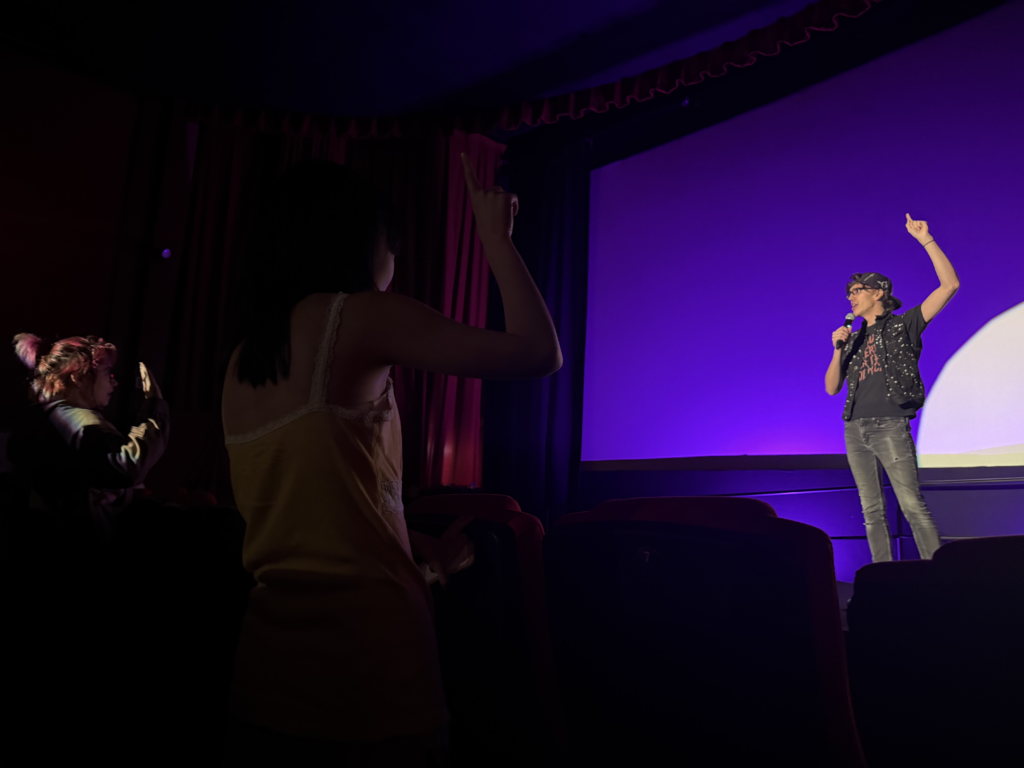
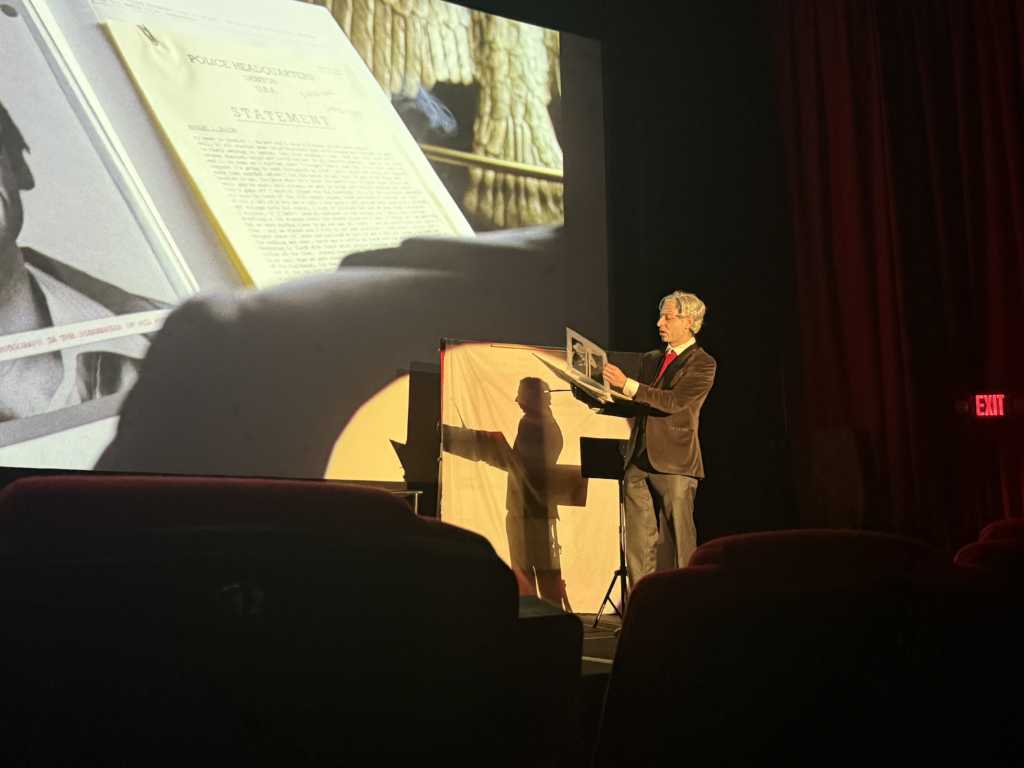
After about 20 minutes of waiting, the emcee would arrive on stage. Typically, the emcee was male-presenting and white, with all three l encountered appearing to be white and two out of three presenting as male. The emcee would then present us with a list of rules:
- The show is offensive, it will make fun of anyone and everyone.*
- Audience members are forbidden from touching cast members without consent. This was referred to by an emcee as the “stripper rule” and accompanied by a quick demonstration.**
- Don’t bring in drugs unless they’re already in someone’s body. The emcee would then frequently reference an alleyway nearby where they could consume any drugs on their person before entering the theater.
- Don’t bring in food, as they sell it at the theater.
- Don’t bring in alcohol, as they also sell it at the theater. The emcee often commented on the sexual unattractiveness of being too drunk.
- Don’t give alcohol to minors.
- No sitting in the aisles, as the actors run through them, often in high heels.
- All items thrown must be thrown up and back, not at the screen or performers.
- No open flames in the cinema. The emcee would then make a joke regarding the double meaning of “flames” regarding homosexuality, either at the audience’s expense or their own.***
- No vaping in the cinema.****
*This felt less like a rule and more like a general content warning. The accuracy of this statement is debatable.
**In one instance, this rule was blatantly disregarded by an extremely drunk audience member who kissed an emcee on the lips during the “Virgin Sacrifice.”
***This is regarding the scene in which a glow stick is used. Originally, people would use a lighter in this sequence, but this presents safety concerns. If audience members do not have glow sticks, the emcee requests that they use their cell phone’s flashlight.
****In one instance, an audience member was caught vaping, and a cast member called them out while performing and instructed the audience to “flip this c— off.”
The Virgin Sacrifice Ritual
After the rules, the emcee requested that the audience stand. They asked audience members how many times they’d seen TRHPS with a shadow cast, starting with 100 times and gradually going to one time. If you had seen the film, you would sit down. They then declared all left standing to be virgins. The virgins were to raise “whatever hand they masturbate with” and repeat a pledge as directed by the emcee. The pledge referenced various actors in the film and included a number of sexual innuendos.
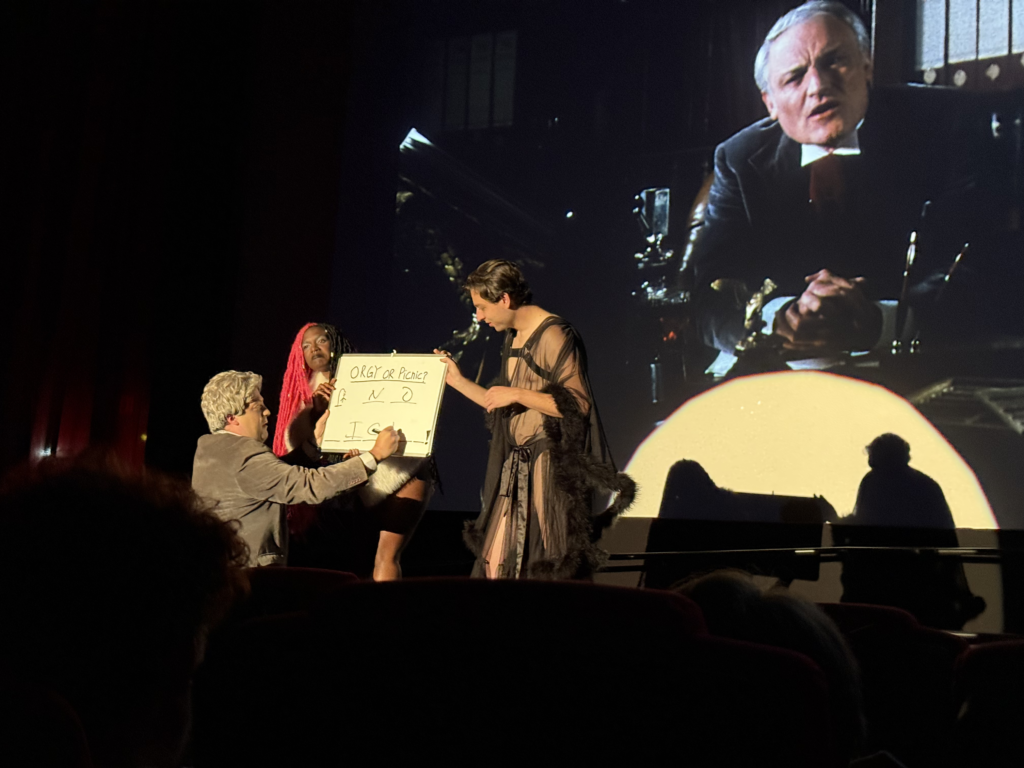
After this, it was time for the Virgin Sacrifice, a hazing ritual performed at seemingly all midnight screenings of TRHPS. I witnessed three variations of this ritual, and from an interview I had with Michael, one of my informants from Sins O’ The Flesh, the practices vary greatly depending on the emcee conducting the ritual. Regardless, it begins with the emcee asking anyone under the age of 18 to opt out. The emcees seemed to choose participants based on the most eager.
The first ritual was a game in which six sacrifices were paired up by twos and given the name of a sex position, then asked to pantomime what this position could look like without seeing an image of it. Afterwards, the volunteers were shown an image of the actual position and had them pantomime that as well. Then, the audience voted based on which pair had gotten closest to the actual position with their initial guess. The winners received a 3D printed figurine of a dinosaur with its head replaced with the head of a penis.
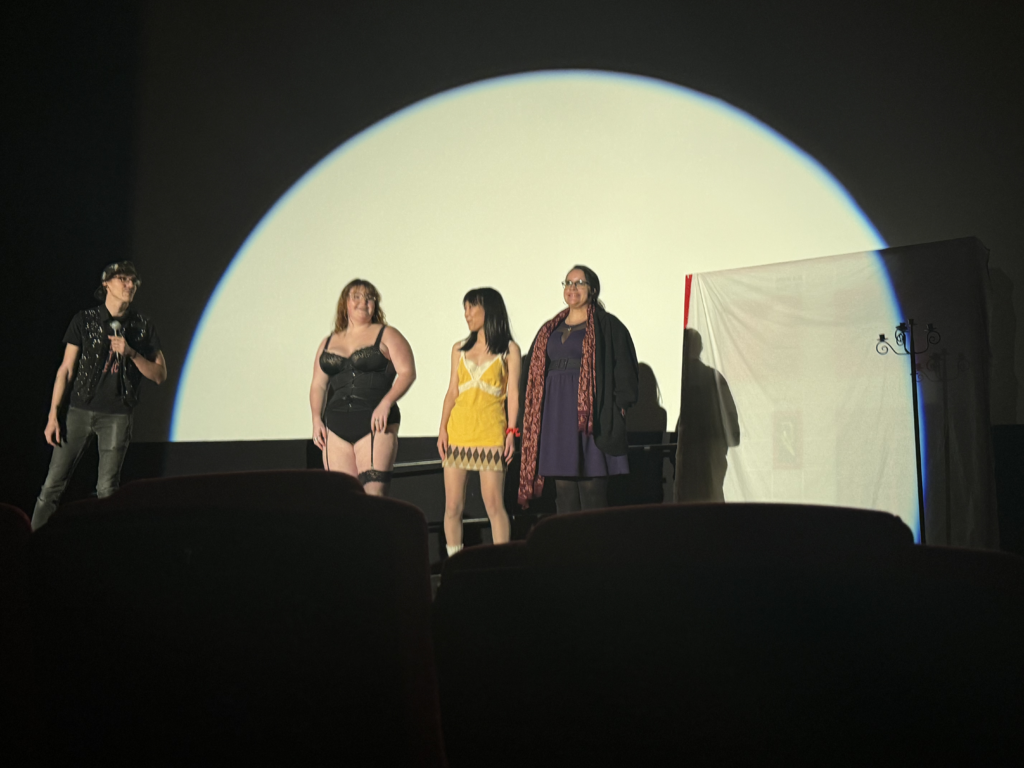
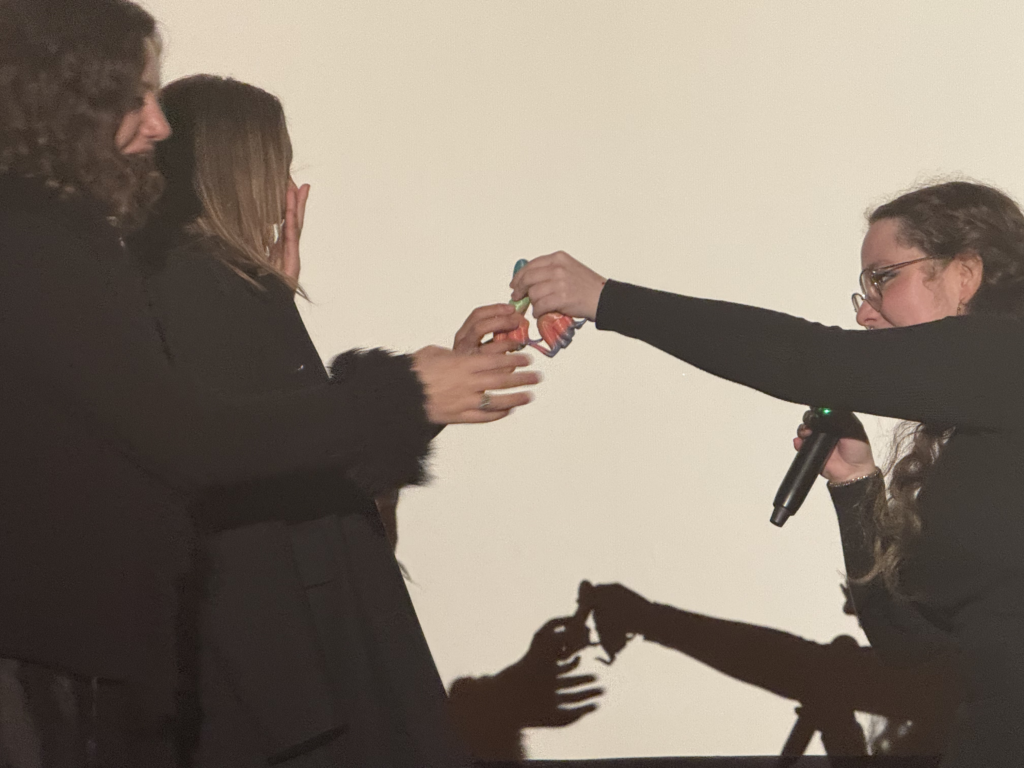
The second ritual was a modified game of Cards Against Humanity,a popular card game in which someone presents a prompt card and the participants must pick a response card that best completes the prompt. Both the prompts and responses are typically explicit and at times offensive. Four audience members were given three prompt cards each and told to choose one that best answers the phrase, “I came to The Rocky Horror Picture Show tonight because I was told there would be…” The winning answer was decided by the level of audience cheering. It seemed that the most sexually explicit answer garnered the loudest audience response.
The third ritual was one I later discovered is quite popular at the Nuart Theater, titled “Who’s Your Daddy.” The sacrifices were all asked to state the names of their fathers. The emcee then asked the sacrifices to imagine their conception and act out their mother experiencing an orgasm while screaming their father’s name. The sacrifices interpreted this prompt in a variety of ways, with some over-acting and some making animalistic screeching noises. The winner was decided by audience approval and received some sort of print.
After the Virgin Sacrifice was finished, Sins O’ The Flesh seemed to do a few additional pre-show rituals unique to their shadow cast. First, the performers portraying the Criminologist and Trixie would lip sync “In the Flesh?” by Pink Floyd, which a cast member I interviewed described as thematically similar to the film and done to hype the audience up before the screening.
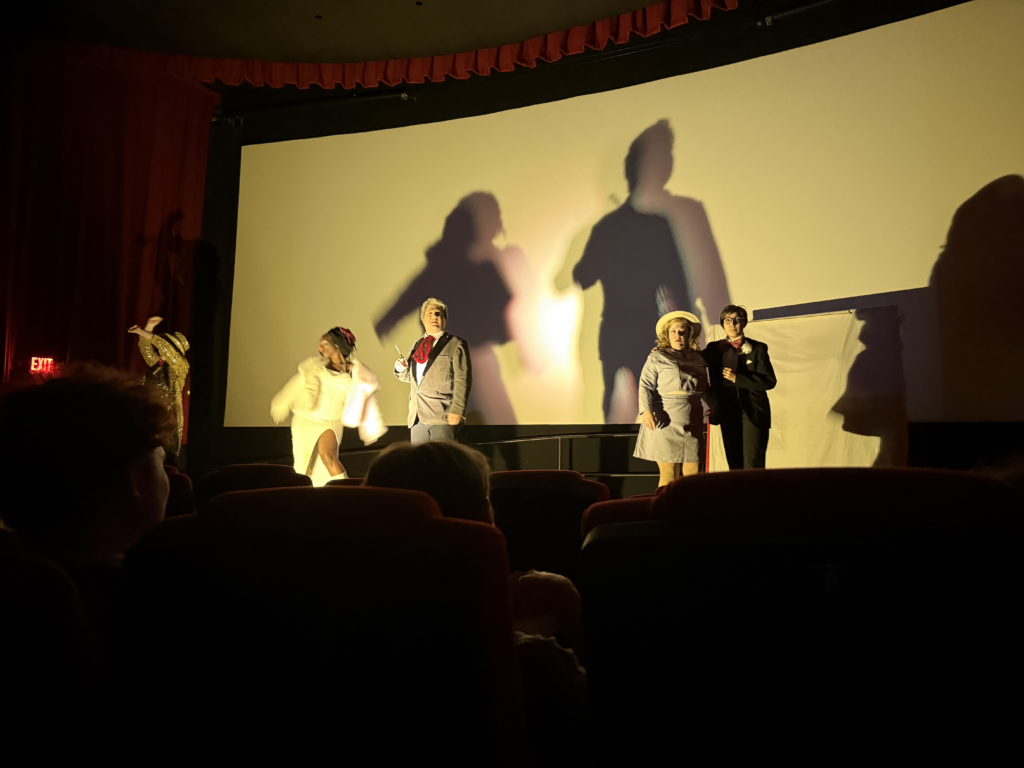
The Advertisements
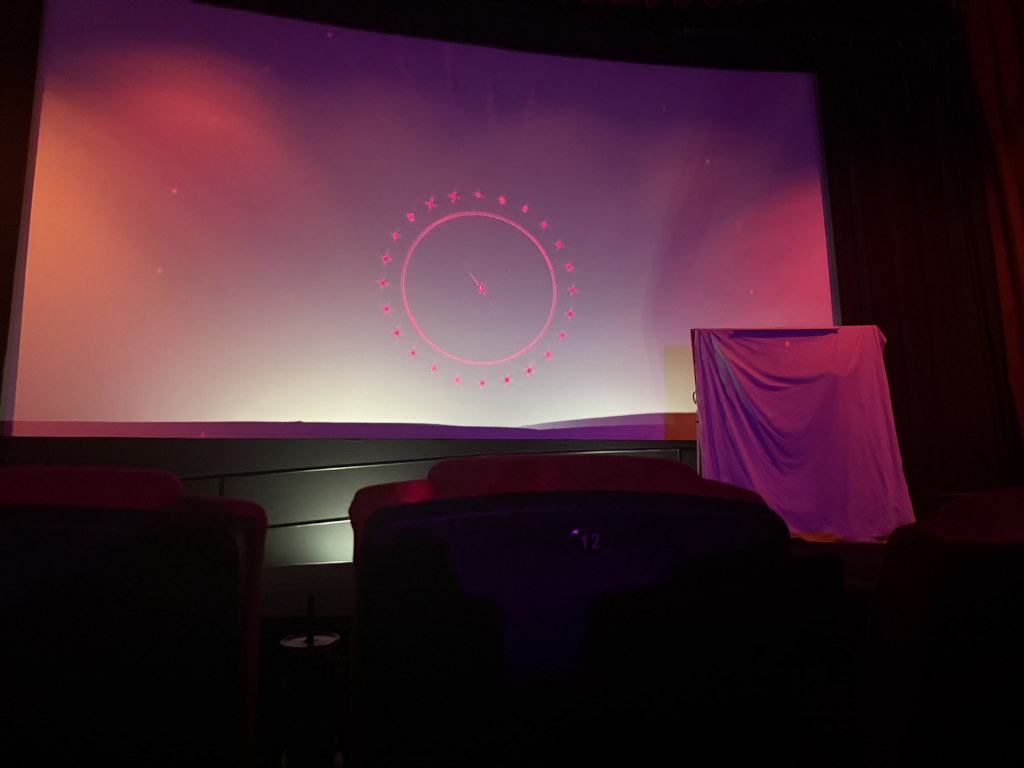
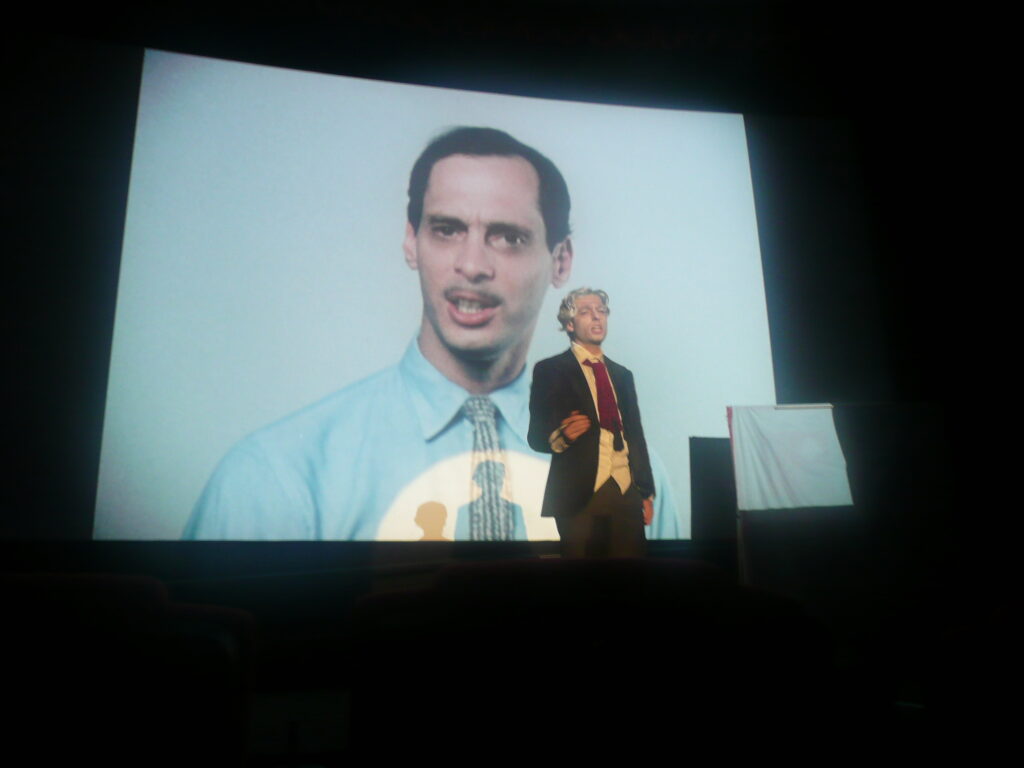
Advertisements were then presented, but they were unlike typical pre-film ads. They would begin with the Criminologist’s actor lip-syncing a PSA in which American filmmaker, writer and artist John Waters tells the audience not to smoke in the theater before devolving into an endorsement of smoking. The Criminologist performer I interviewed, Vic, described his performance in this sequence as ”very flirty with the audience.”
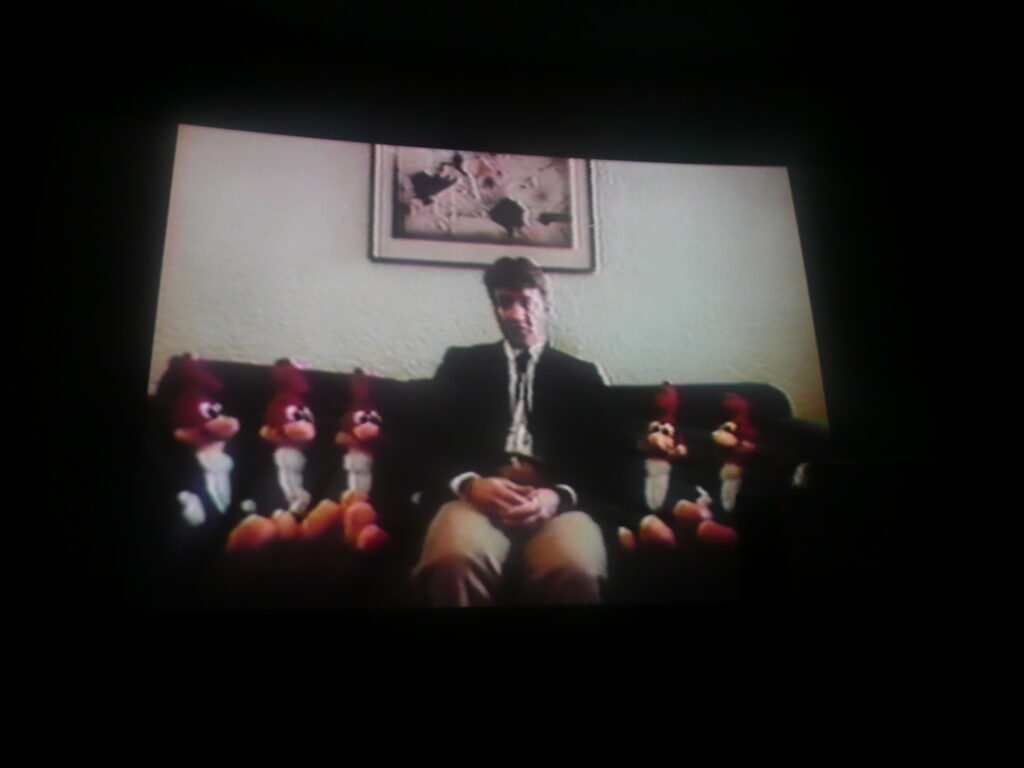
Next was a video of the late director and artist David Lynch, sitting on a couch with five plush birds, whom he introduced to the audience. He then thanked the Nuart Theater for showing his film, Eraserhead (1977), and ended the video by wishing the audience peace and happiness. The audience erupted into cheers and applause upon seeing Lynch, who had passed away rather recently.
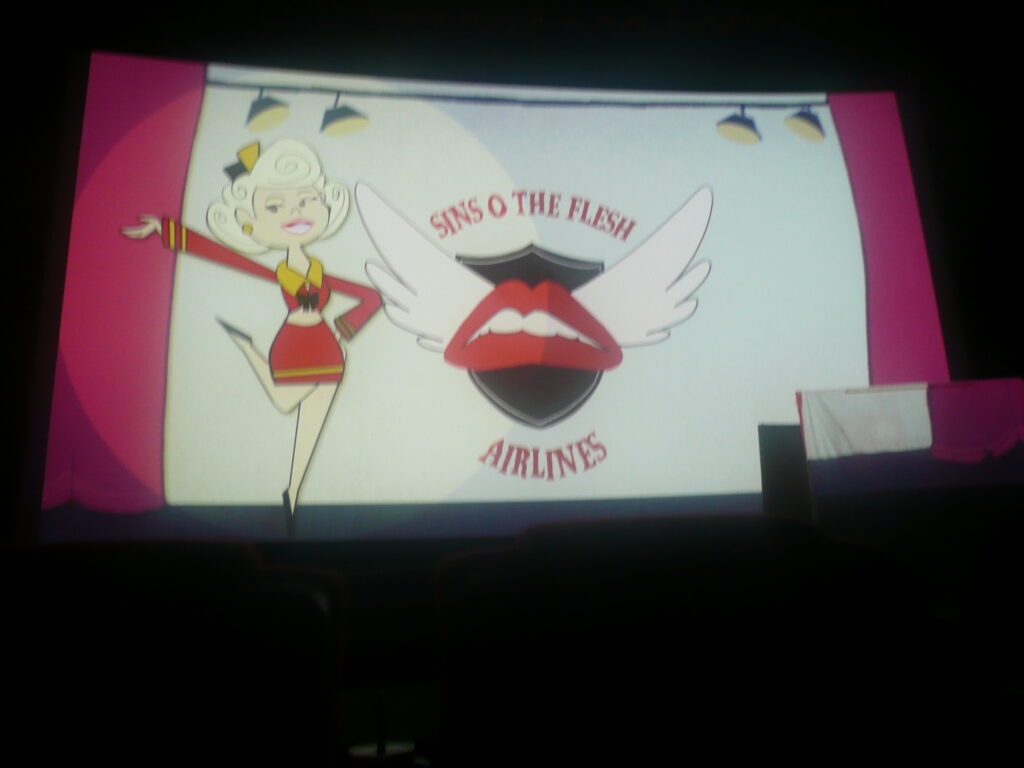
Afterwards, they play an animated video reiterating the rules. This segment repeats the phrase, “Don’t throw your f— shit at the f—screen” numerous times, which leads me to believe this must have once been quite an issue at screenings. Next, a trailer for a seemingly random film would play. The first time, they played a trailer for Wild at Heart (1990), directed by David Lynch. The second time, they played a trailer for Leprechaun 4: In Space (1996). The third time, no trailer was played at all.
Then, at all three screenings, a title card was displayed which read: “And now the feature presentation.” This title card was repeated at least twice, with cast members either cheering and shouting for it to come back—”Again, again!”—or the emcee accusing the audience of not clapping loudly enough. Finally, the film would begin.
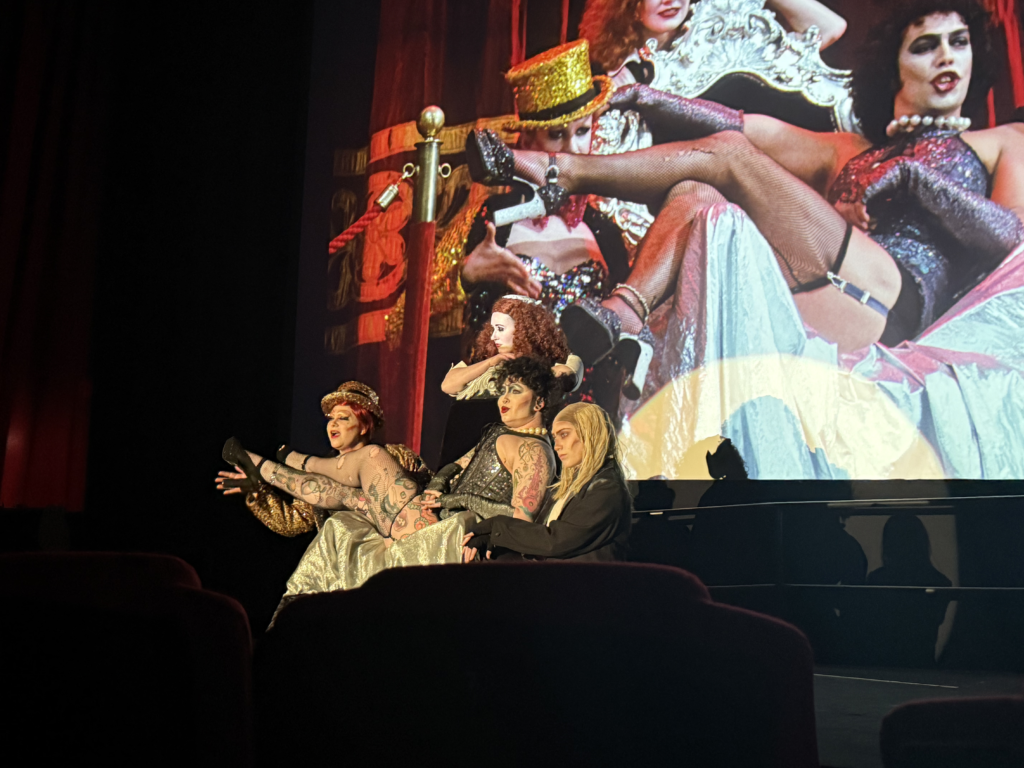
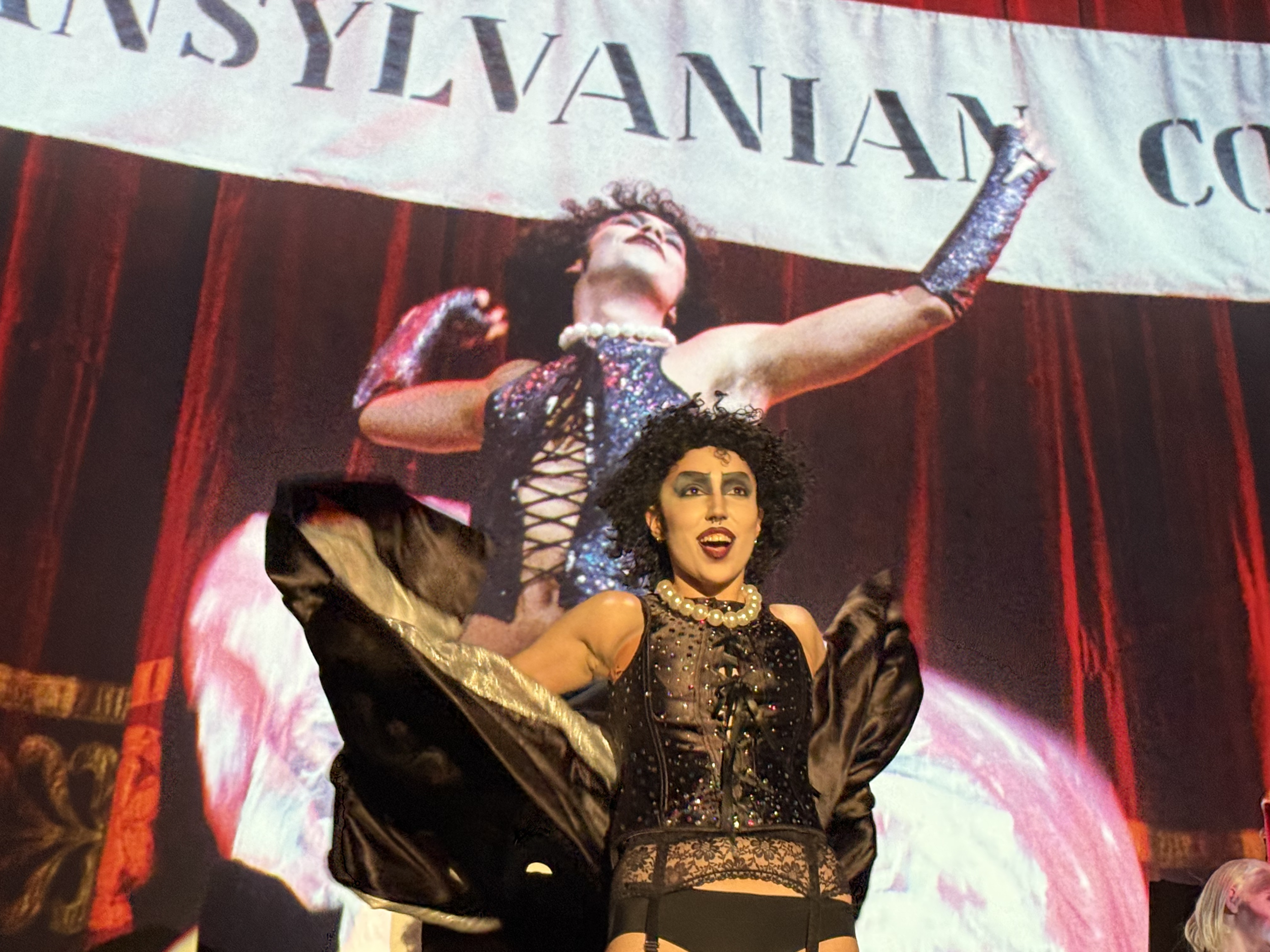
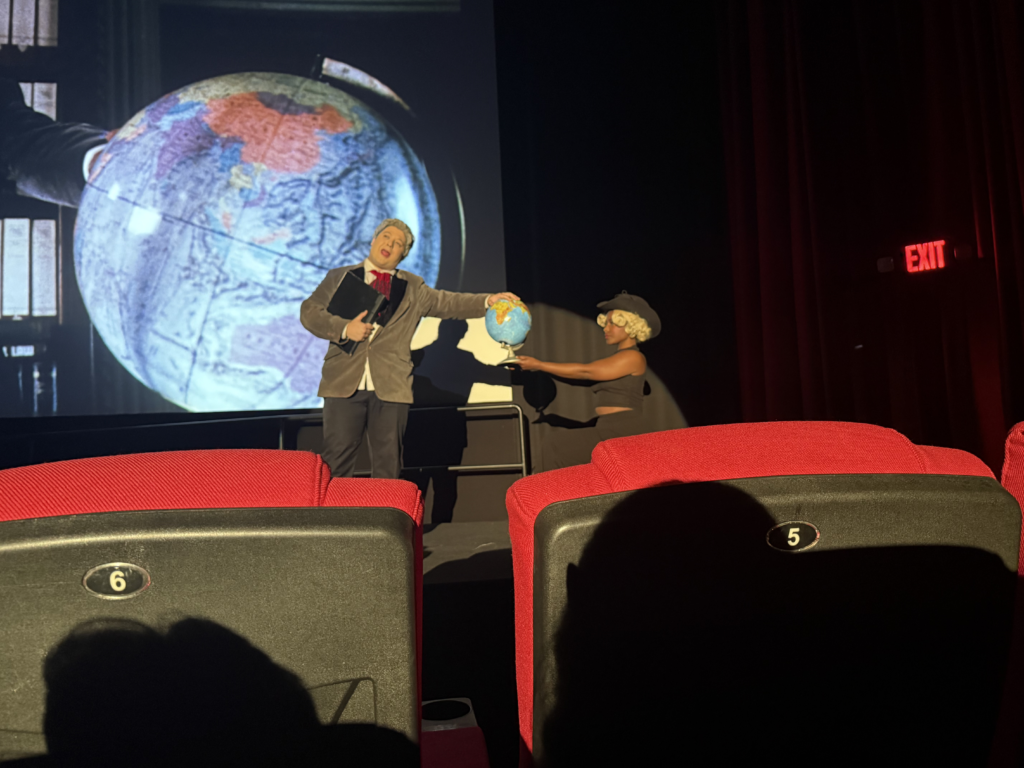
While TRHPS played on the screen, a cast of costumed performers acted out the entire film below it. Audience members were encouraged to sing along, stand up at certain points, shout obscenities at the screen and throw items. Sins O’ The Flesh is known as one of the most organized and professional shadow casts in the world, with extremely screen-accurate costumes and performances.
Trixie
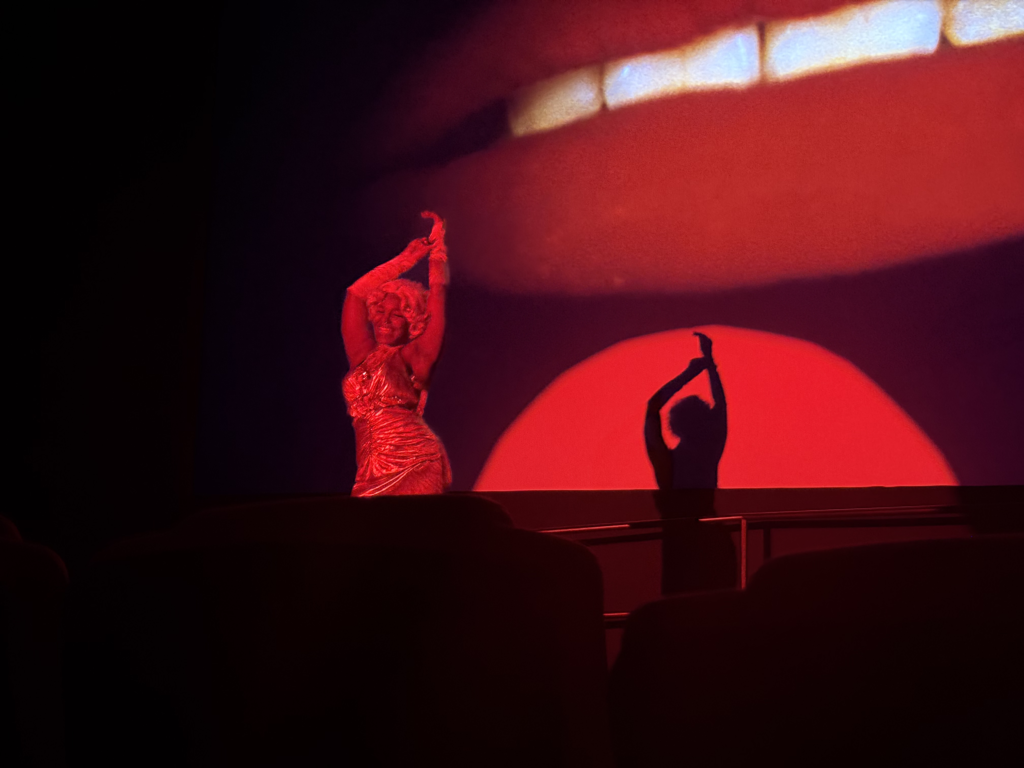
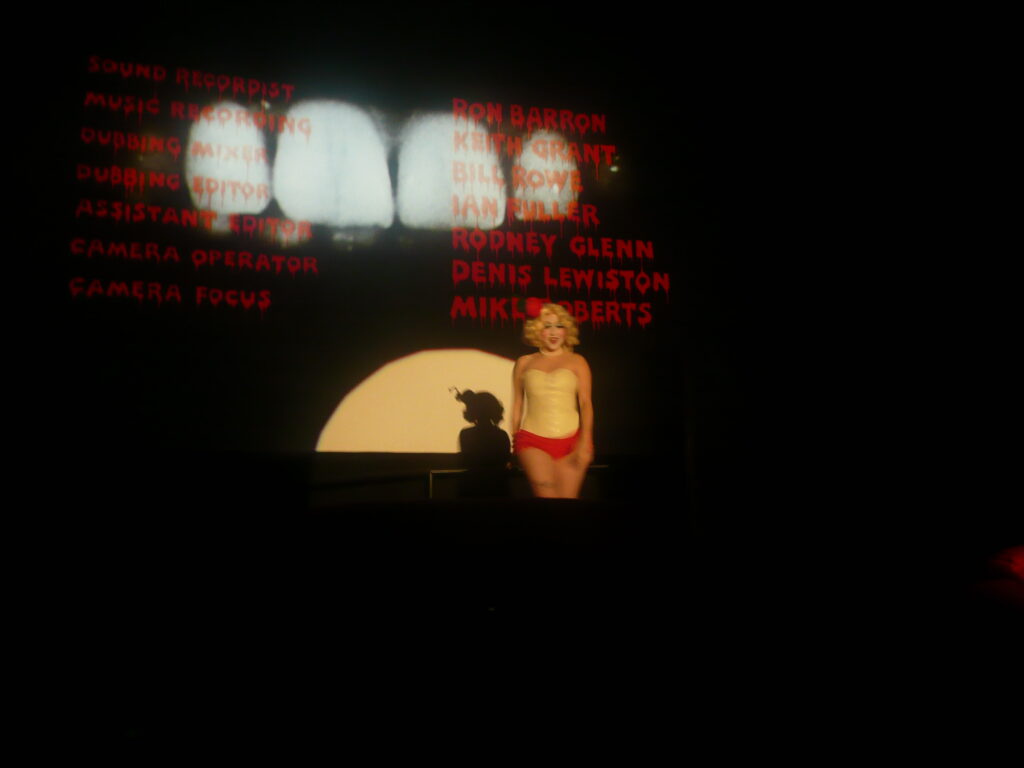
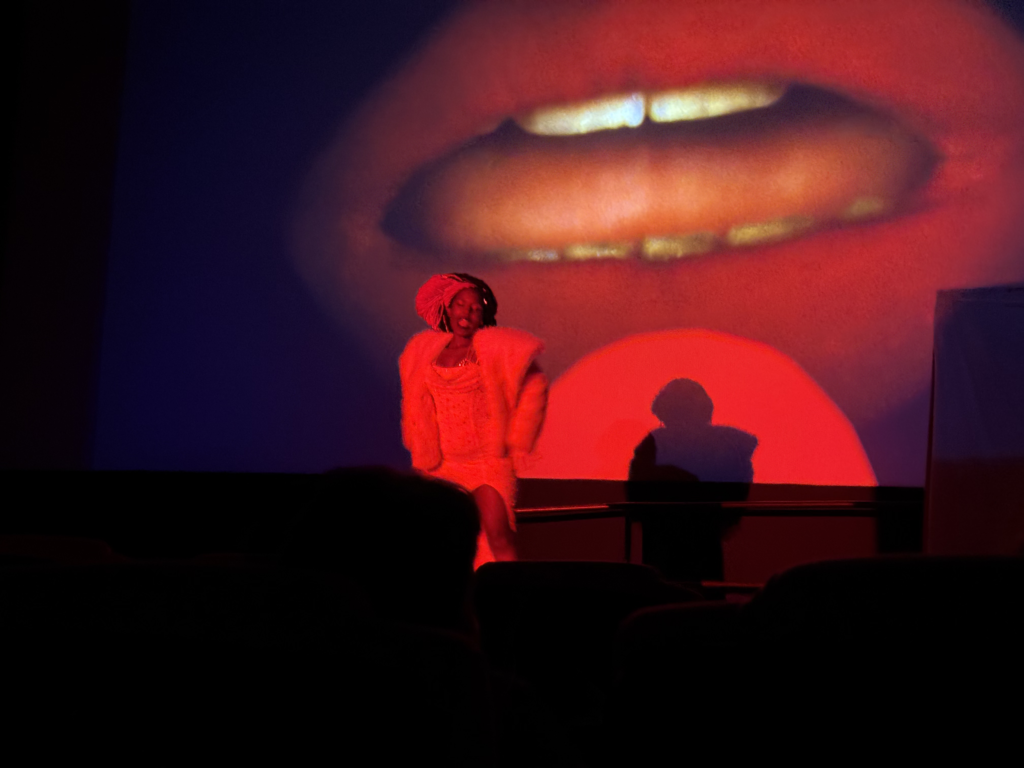
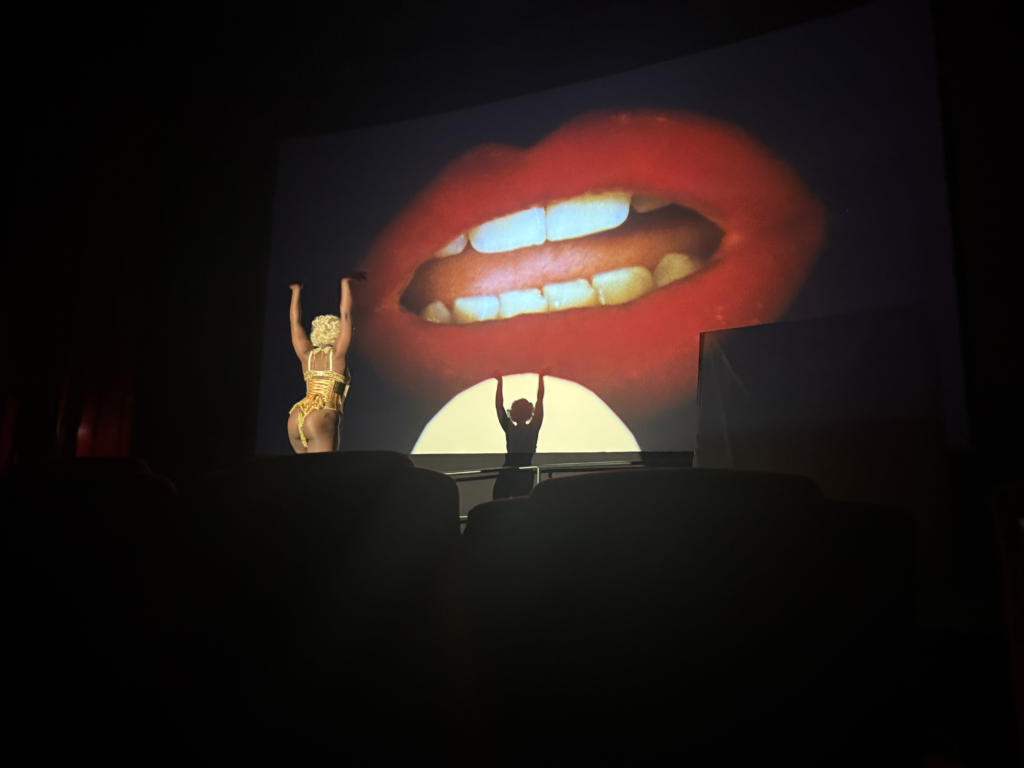
The film begins with a song titled “Science Fiction/Double Feature,” in which a pair of red lips sings overlaid on a black background. As there are no actors present in the scene, shadow casts must get creative with what they feature.
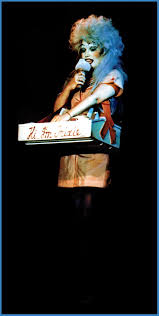
It is common practice for this sequence to be accompanied by a burlesque show. A character referred to by fans as “Trixie” lip-syncs the song as they gradually strip. Typically, this performer is female-presenting. In my interview with Vic, I learned that this role is considered difficult, as the performers are required to supply at least three original themed outfits.
The Trixies I saw varied quite a bit. The first wore a Marie Antoinette inspired get-up with a giant cherry on her head, the second dressed in an all-gold look and the third wore a costume inspired by Hollywood starlet fashion from the 1930s to the 60s. All three performers wore a corset, pasties and matching underwear underneath their outfit, which was revealed by the end of the performance. Notably, this is the only role that is frequently portrayed by Black performers.
Call-Outs
An important element of the film is a practice referred to as call-outs. This encompasses all interjections and jokes made by the audience and off-stage cast members during the film. These can vary widely from screening to screening, and often rely on shock value, references to sexuality and both current and 1970s pop culture. The most common call-out across productions is that Brad and Janet are to be referred to as “asshole” and “slut,” respectively. It is standard practice to yell these nicknames when the characters’ names are spoken, and a cast member in the front row even held up signs reminding the audience to do so at specific moments.
The number of call-outs is long and varied, but a few examples include:
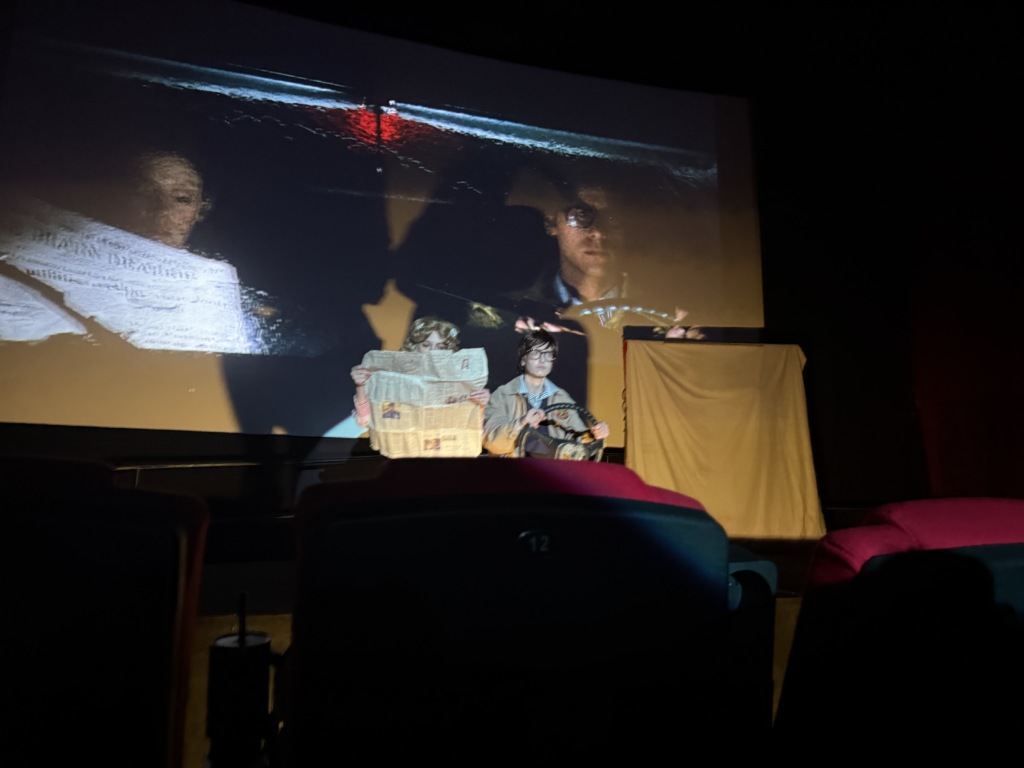
- After Brad and Janet’s car breaks down, they debate whether Brad should leave the car to find someplace with a phone to call for help. Brad says the line, “Didn’t we pass a castle back down the road a few miles?” The audience responds by yelling, “Castles don’t have phones, asshole!” This call-out has become so common that some audience members will riff on it and say, “Phones don’t have castles, asshole” instead.
- During the song “Sweet Transvestite,” Dr. Frank-N-Furter sings the line, “I see you shudder with antici…pation,” with a very long pause before he finishes this word. During this pause, audience members will scream “Say it!” or some variation.
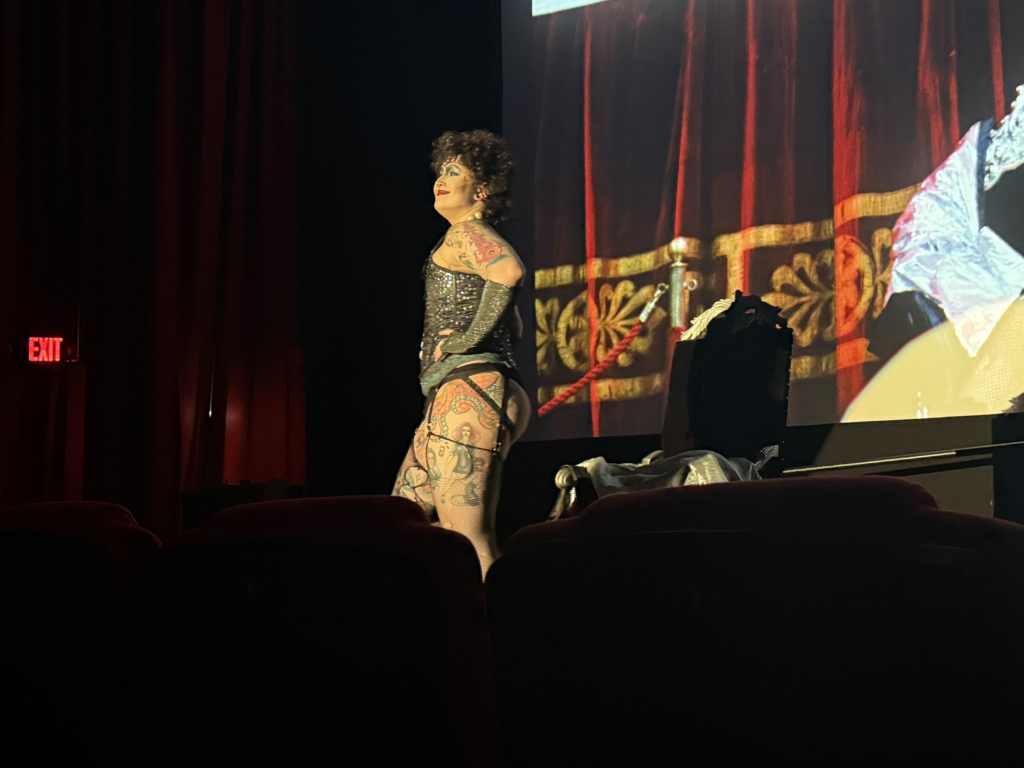
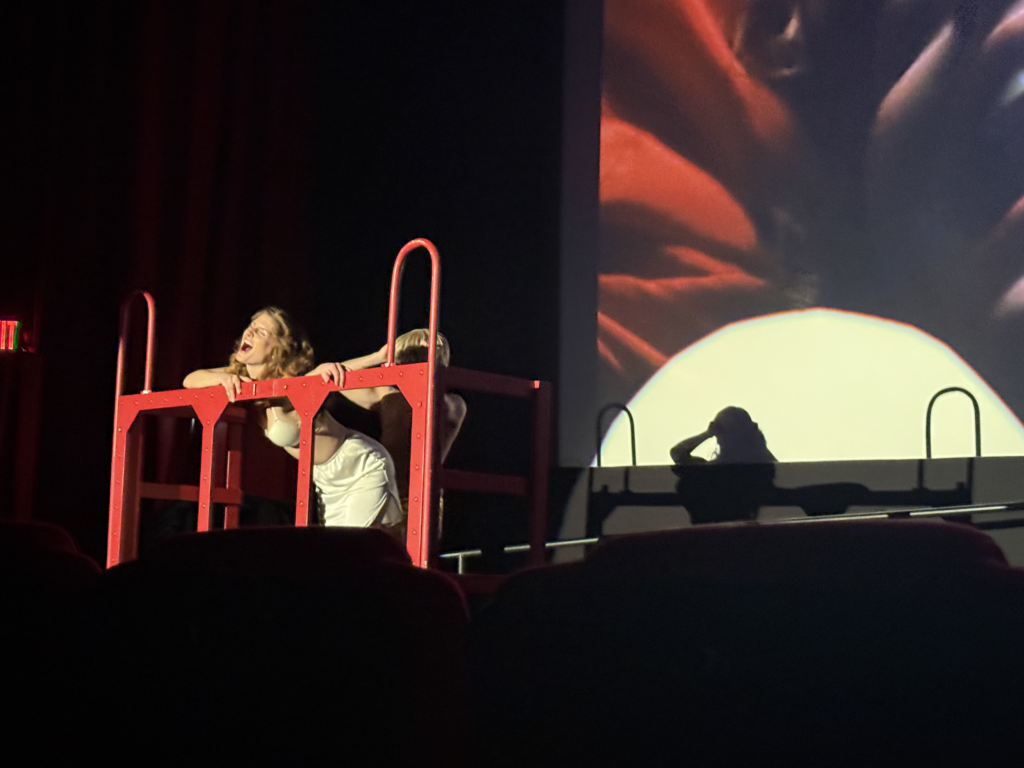
- In a scene where Janet is considering sleeping with Rocky, she looks back and forth between him and a spot behind the camera, as though she’s looking out at the audience. As she looks back and forth, the audience calls out, “Hey Janet, who would you rather have sex with, Rocky or the audience? Rocky? The audience?” Eventually Janet settles on looking out at the audience and smiles, causing the audience to cheer.
- There is an extended scene where various characters call out each other’s names, three times in a row. “Janet! Dr. Scott! Janet! Brad! Rocky!” When Rocky’s name is called, he says nothing, causing a natural pause. During this pause, the audience shouts “Bullwinkle!” referencing the late 1950s animated duo Rocky and Bullwinkle.
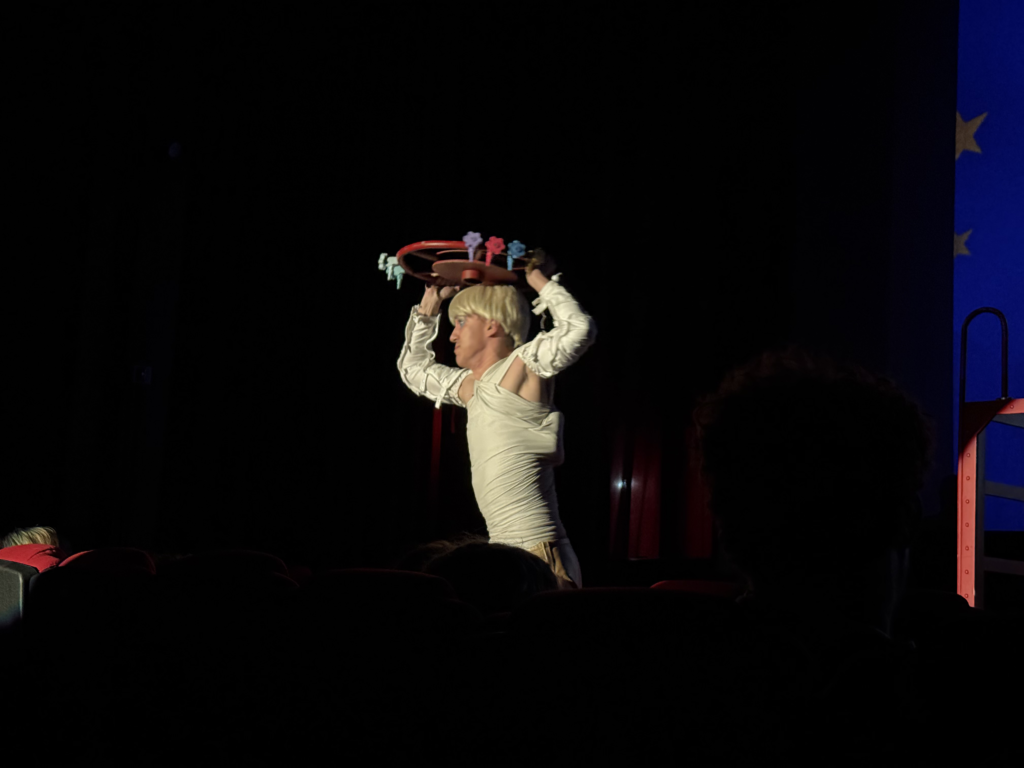
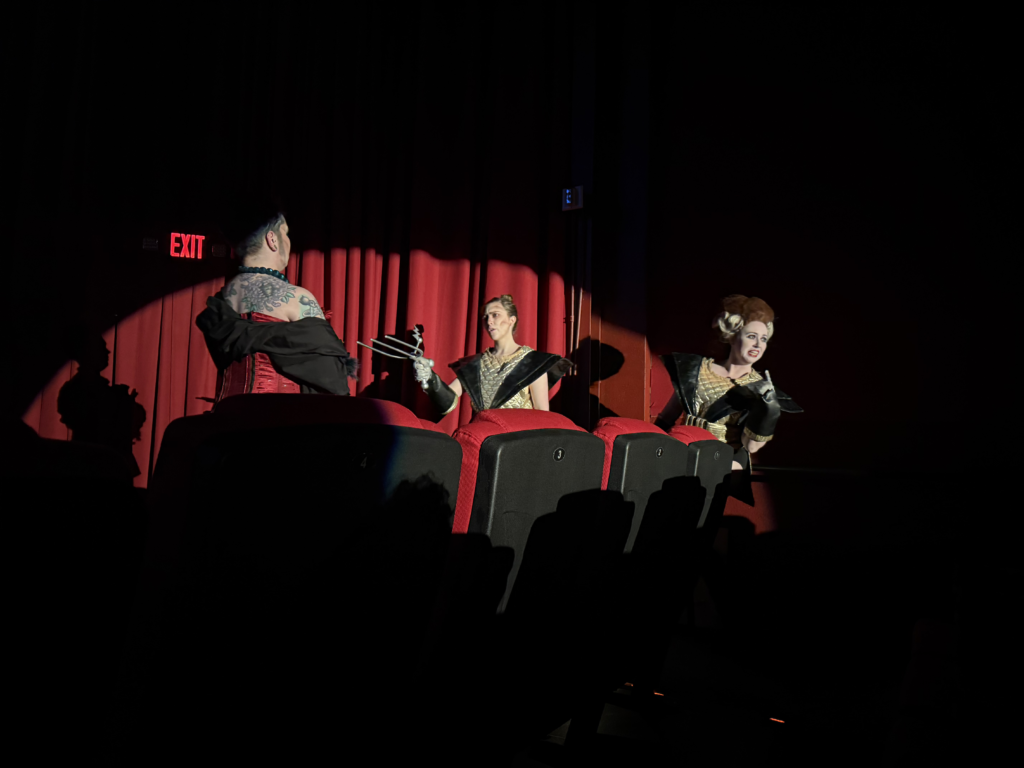
- Multiple times, the characters Riff Raff and Magenta perform an alien ritual where they touch elbows. Each time they do, the audience chants, “Elbow sex! Elbow sex!”
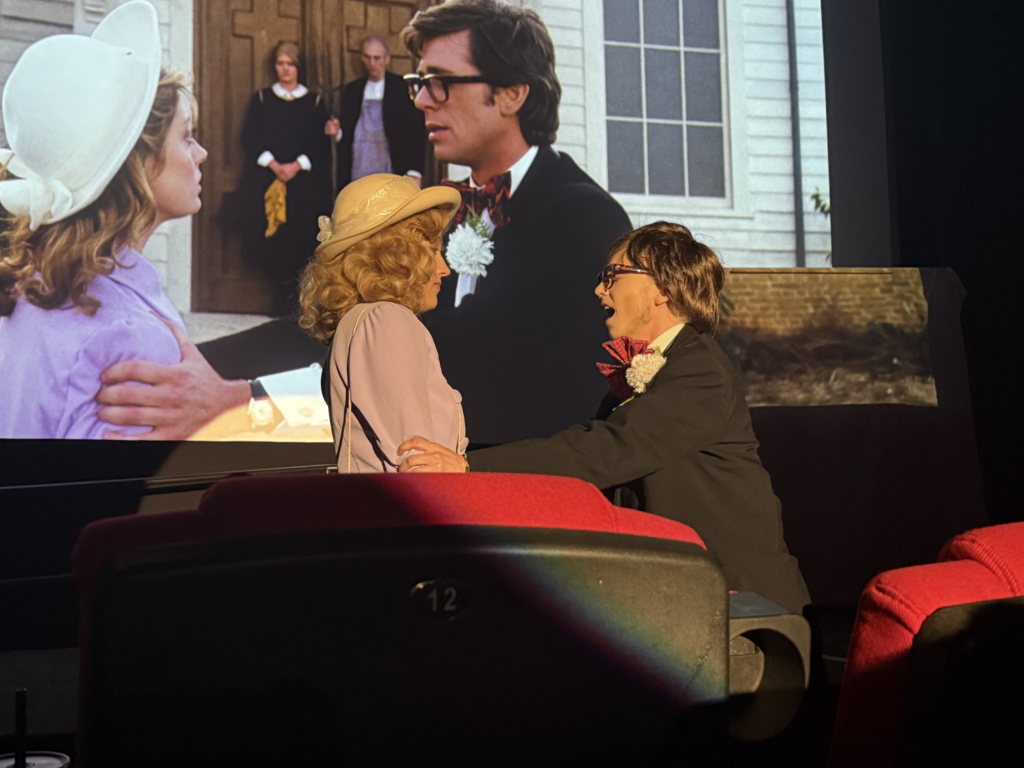
At the screenings I attended, the audience often lost steam by the end of the film and stopped firing out as many call-outs. There is no strict catalogue of call-outs that are featured at every screening, and audience members are encouraged to come up with their own original call-outs. This differs heavily from the standard American movie-going experience in which such behavior is considered a massive faux pas. I initially assumed that call-outs were read from a script of some kind by cast members, but through my interviews, I learned that they’re all ad-libbed, meaning any frequently repeated call-outs developed and found a place in the fan lexicon organically.
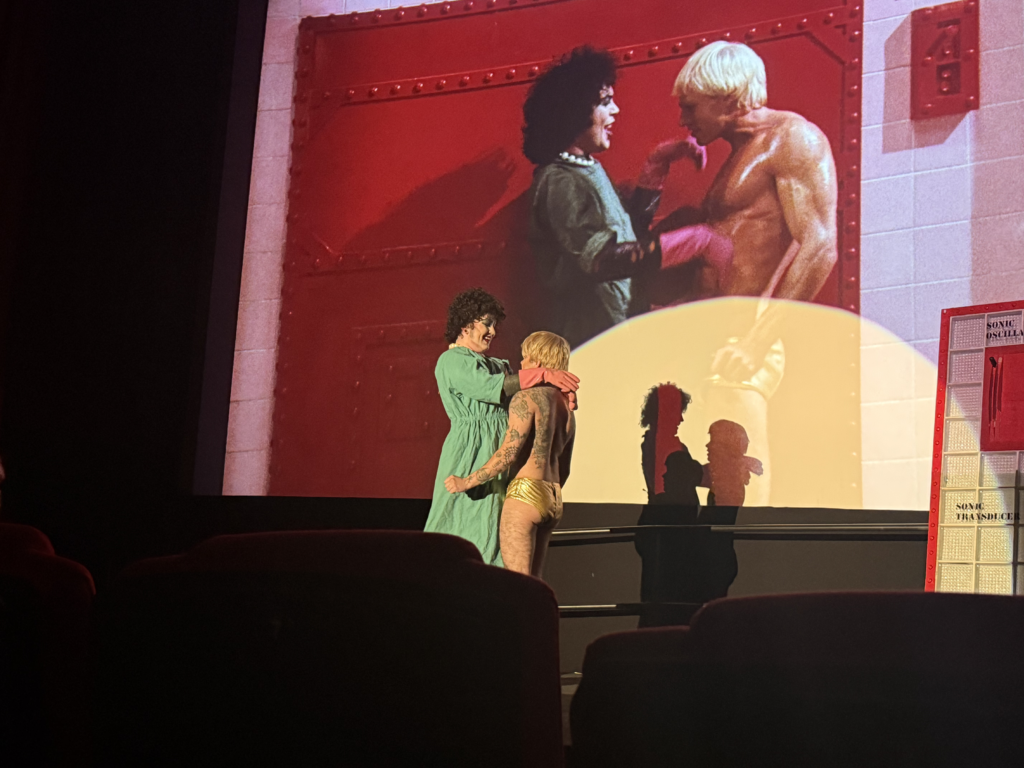
Audience Interactions and Modifications to the Film
Another important element of the experience is interactions with the screen, both by the cast and the audience. To an extent, one could consider the call-outs an interaction with the film itself, especially when they act in conversation with the work. The Sins O’ the Flesh cast interacted with the screen in more direct ways. For instance, during the song “I’m Going Home,” when Dr. Frank-N-Furter swats his hand, a cast member poked the screen near his hand with a feather duster, making it appear that Frank is pushing them away.
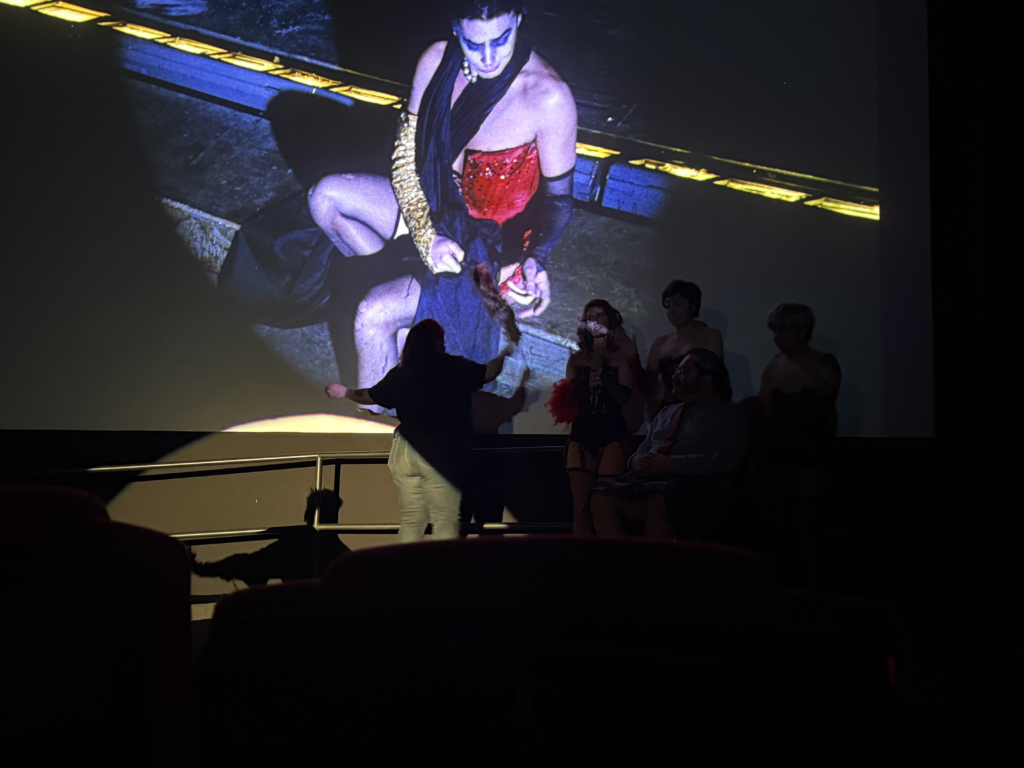
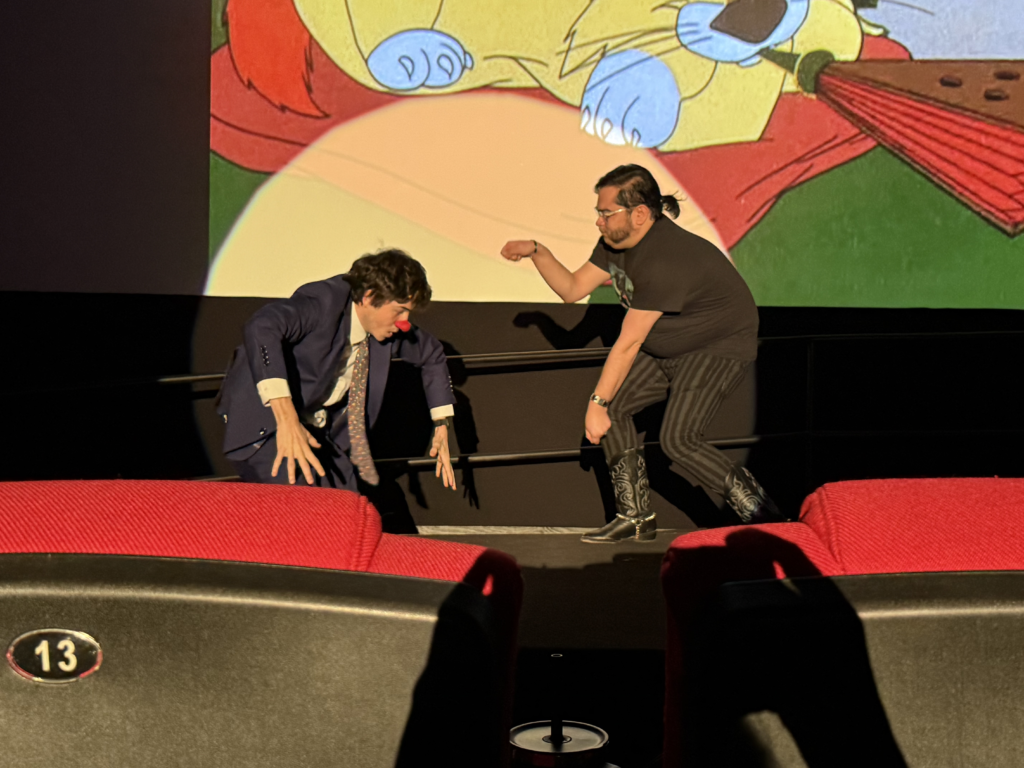
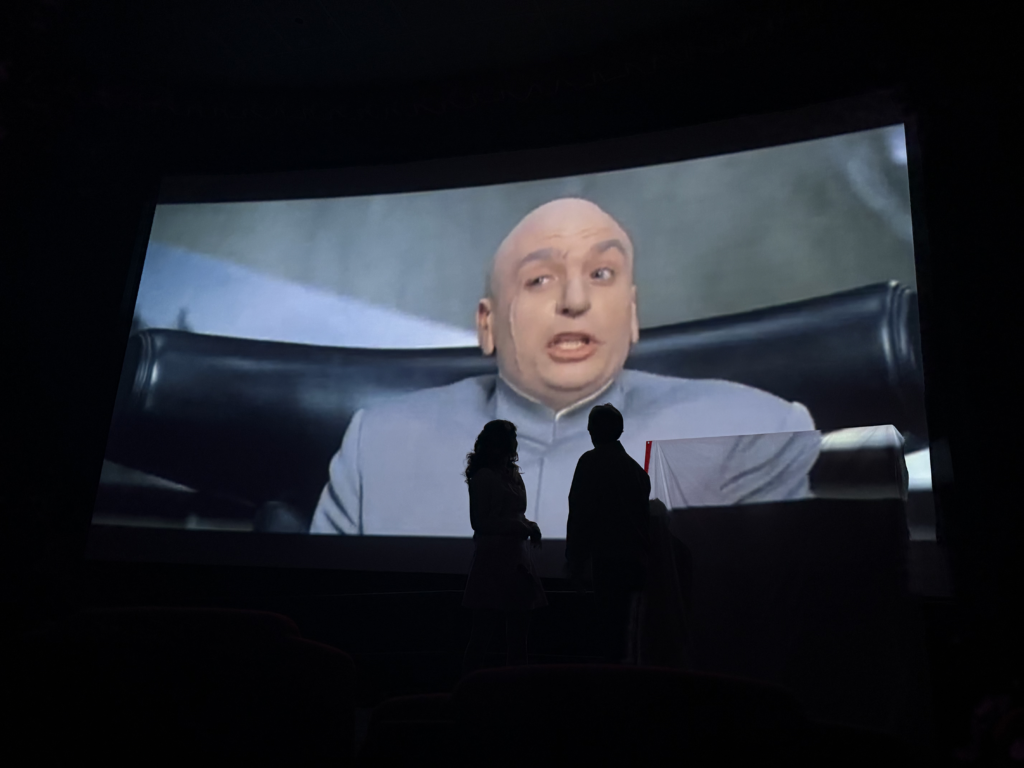
The film itself is also modified at times. This is less common with the Sins O’ The Flesh cast than others, as they’re known for their screen accuracy, but it still appears during a specific sequence. In the song “Sweet Transvestite,” Frank pauses in the middle of the word “anticipation.” This pause is rather long, so the shadow cast will riff on it by filling it with a scene from something else. Each time I saw it, the reference was different. The first time, the pause was replaced with a rather lengthy scene from Tom and Jerry, with cast members acting it out below the screen. The second time, it was replaced with a scene from an Austin Powers film. The third time, it was replaced with a scene from A Minecraft Movie (2025).
While not present at Sins O’ The Flesh productions, some shadow casts will alter the scenes in which Frank-N-Furter sleeps with Brad and Janet to remove any implication of dubious consent, an element of the film that many fans find uncomfortable. For instance, I attended a production put on by an independent theater company at the University of Southern California (USC) where this scene was dubbed over to make it clear that both encounters were fully consensual.
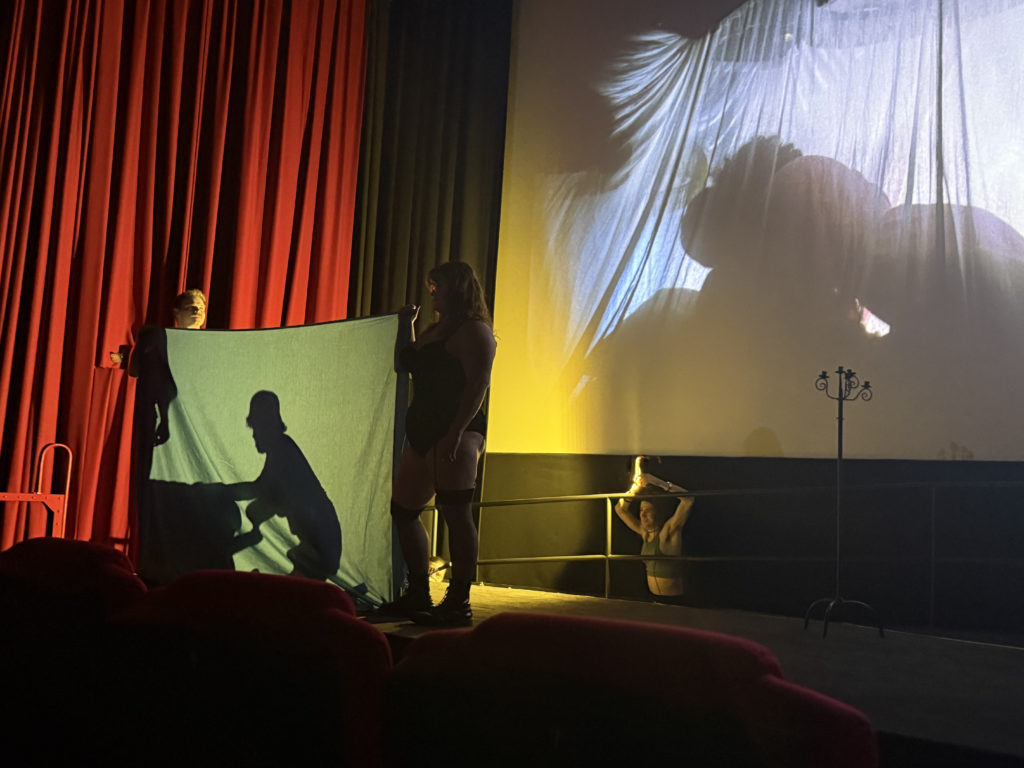
The final important element of the experience is interactions with the audience. Throughout the film, one is made aware that the shadow cast exists in the same space as the audience. As stated in the “rules” above, performers often use the aisles as an extension of the stage, as well as the seats. In one scene, Dr. Frank-N-Furter even throws water at the audience. In the dinner scene, a cast member (typically Riff Raff’s performer) would exit the narrative of the film and speak directly to the audience, reminding them that the performers are unpaid and urging them to tip after the show.
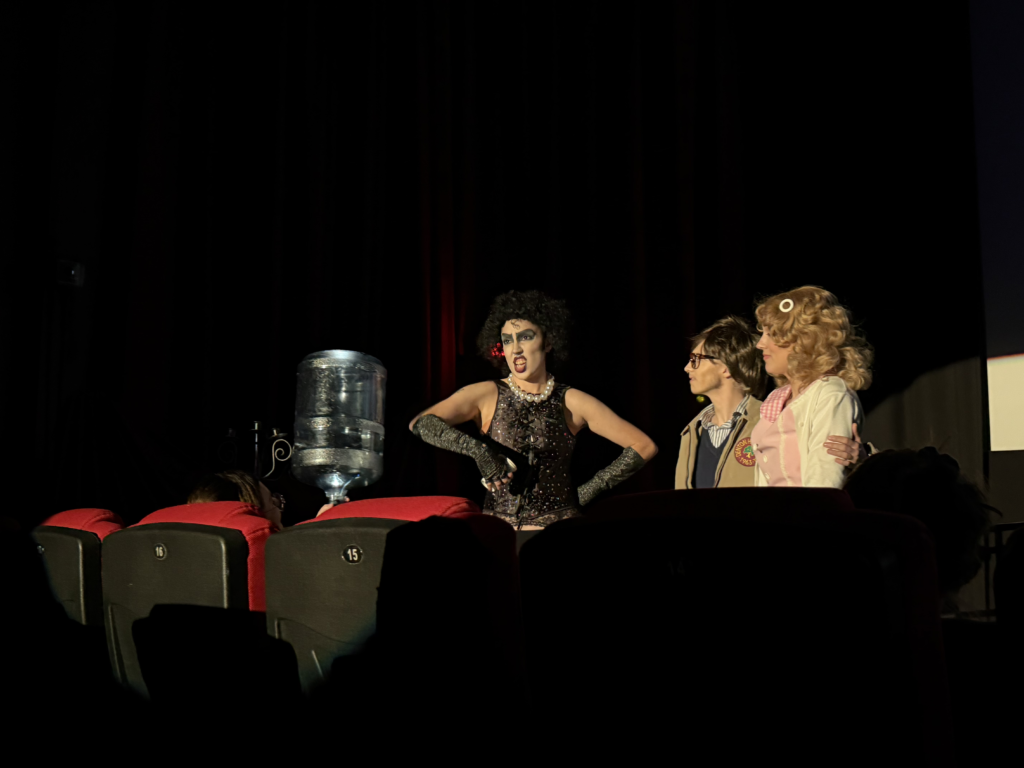
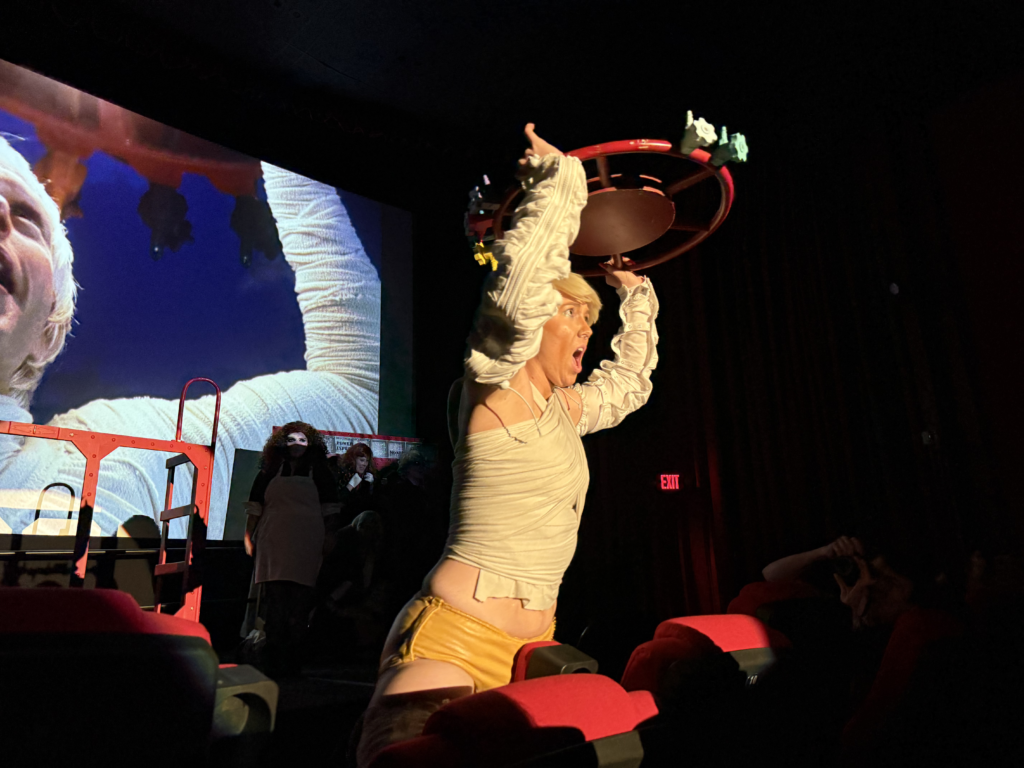
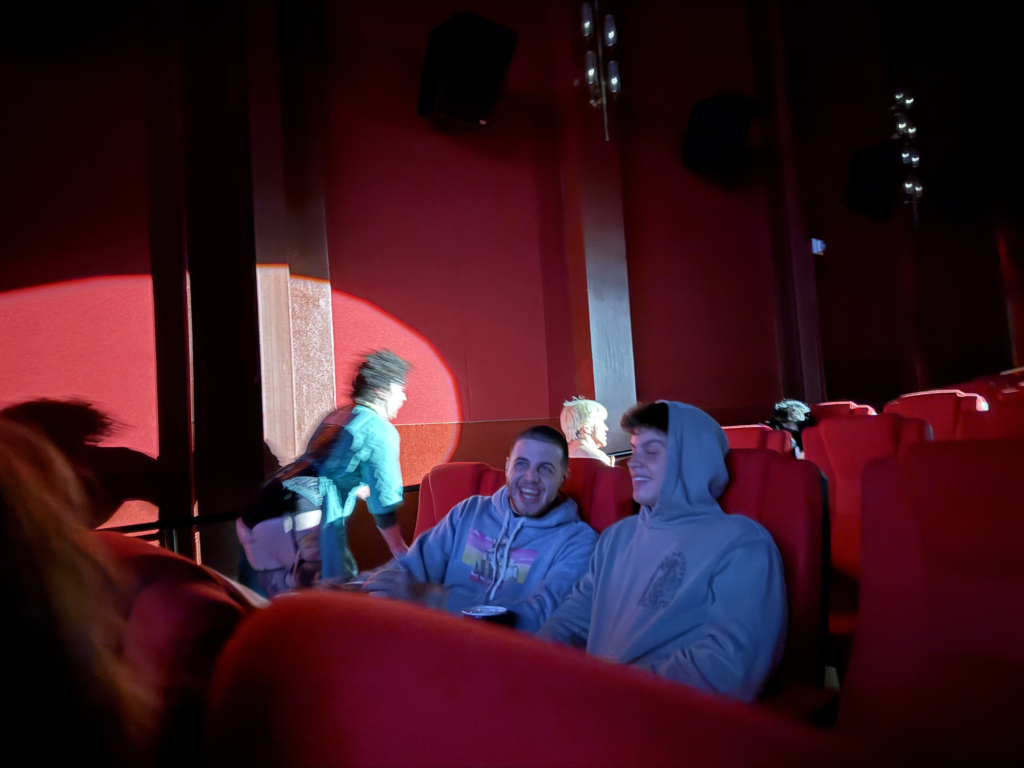
I find this practice fascinating, as it reminds the audience that the lines between performer and watcher are not strict. The performers are not untouchable. They are not of a different class than the audience. Both groups are invested in the show as fans. Cast members sit in the audience at times, making this dual role even more apparent. Cast members would also encourage audience members to apply to join the cast by listing roles currently available before each show began.
Differences in Productions
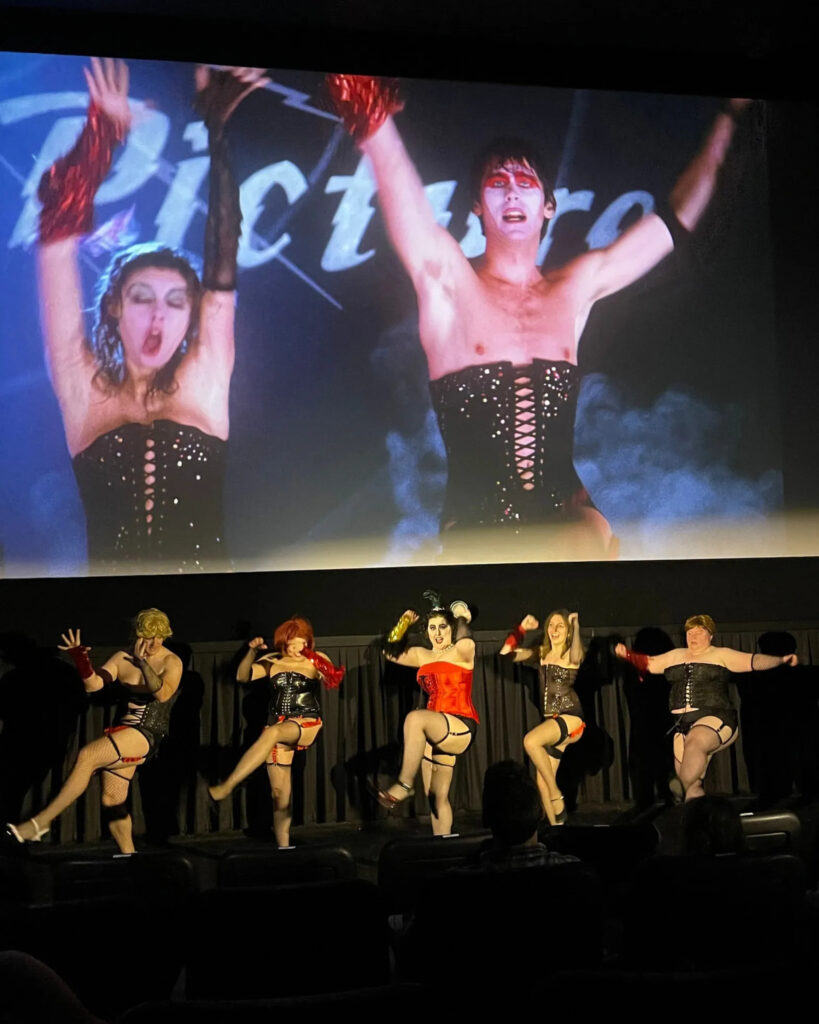
While the bare-bones elements of midnight screenings are the same in many shadow casts (i.e., performers lip sync the film beneath the screen in costume, audience members are encouraged to sing, comment and use props), there is great variety from production to production. Some casts may modify the content of scenes, as the USC production did. Another common variation is whether or not a shadow cast participates in a ritual called the “Underwear Run.” The Sins O’ The Flesh do not, but one group local to the DC metropolitan area, the Sonic Transducers, does. After Frank-N-Furter slaps Janet in the face, she takes off running in her underwear and the audience is encouraged to undress and run out of the screening room. This ritual can present some issues. For instance, if the cinema plays multiple films at midnight, it may lead to unsuspecting patrons being made unwilling participants. Additionally, despite the wishes of the theaters and casts, midnight screenings are sometimes attended by minors.
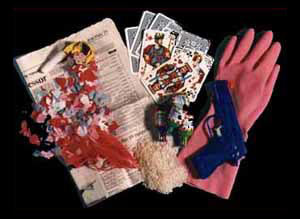
Props also commonly differ. Depending on the cast and the theater, additional props might include:
- Rice, to be thrown in the wedding sequence. Sins O’ The Flesh omit all food-related props for the sake of their continuing good relationship with the Nuart.
- Water guns, to be used in “Over at the Frankenstein Place” when Brad and Janet exit the car. This is likely omitted because water poses problems for the screen.
- Toast, to be thrown when Dr. Frank-N-Furter proposes a toast.
- A birthday hat, to be worn when Dr. Frank-N-Furter sings “Happy Birthday” to Rocky.
- A bell, to be rung when Dr. Frank-N-Furter asks, “When we made it, did you hear a bell ring?”
Structure of the Sins O’ the Flesh cast
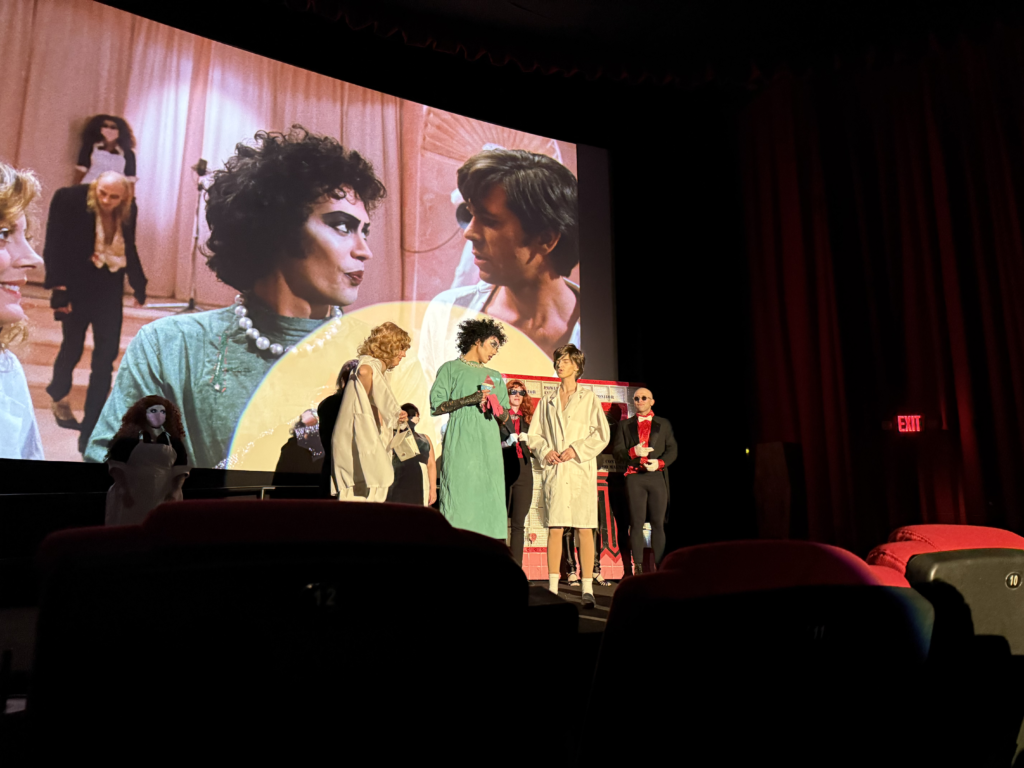
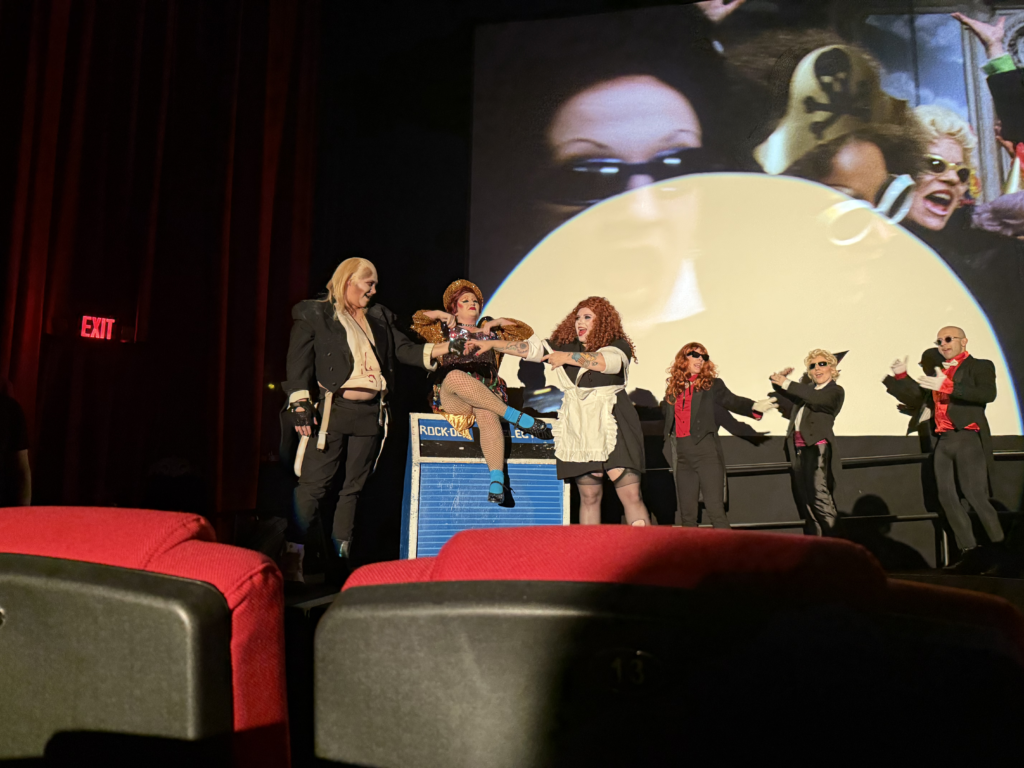
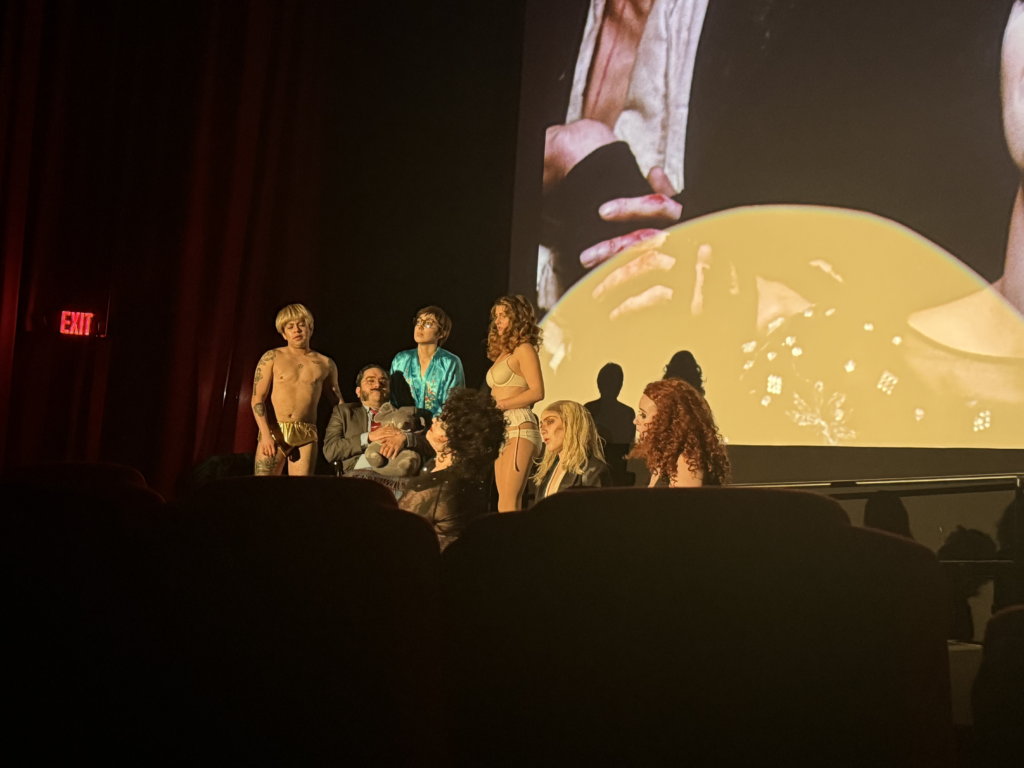
The Sins O’ The Flesh shadow cast is known for its screen accuracy and consistent showings. I was able to interview three members of the cast who shared how they organize these screenings: Vic (the Criminologist), Michael (Rocky) and Libby (an ensemble member).
The Sins O’ The Flesh shadow cast has been refining their process since the 1980s and is extremely well organized, which Vic claimed is due to the cast’s Constitution, a set of rules and processes spearheaded by the two cast leads. Vic, who has a background in cinema, described this Constitution as being better organized than any set he’s worked on.
The Constitution details what the expectations are for each performer in regards to costuming, line memorization and rehearsal and screening times. Each role has at least three performers who work on a rotating basis and provide their own costumes, with some exceptions for certain specialized costume pieces. The Constitution also includes a Code of Conduct, and performers receive regular evaluations.
There is also a minimum age requirement of 18. Libby, who is currently 21, is one of the youngest cast members and has been performing with Sins O’ the Flesh for three years. When asked why they set this limit, Vic told me that it was to prevent legal issues and avoid attracting cast members with bad intentions.
In order to audition for the Sins O’ the Flesh cast, one must apply through a Google form, which can be found on the cast’s Instagram page. The form makes it clear that the prospective performer must provide their own costuming, asks about their experiences with TRHPS and if they have theatrical experience, which is not required. Auditions are held about once a month; cast members watch the auditionee perform a few scenes in-character while the film plays behind them. If the person fails their audition, they are providing infinite opportunities to re-apply until they have shown sufficient improvement. Michael in particular told me that he had to audition twice, as he initially got the blocking of his scene wrong.
Final Thoughts
In the six interviews I conducted with cast members, both from Sins O’ the Flesh and the USC student shadow cast, I found that five of the participants identified as some shade of queer. Michael described his cast as “an environment where being LGBTQ+ is more common than not.”
Jack, a transgender man who portrayed the role of Dr. Scott in one of USC’s student productions, discussed his initial anxiety regarding a scene in which he performed in fishnets and high heels, as he didn’t feel connected to femininity. But upon performing, he described feeling as if he was reclaiming these objects through drag. Vic told me an anecdote about one of his castmates, Zoe, who was assigned male at birth. Zoe was “kind of just generally stoic and quiet, and somewhat unhappy and uncomfortable.”” She played the role of Brad with Sins O’ The Flesh for a while, until one day they needed someone to play Magenta. She agreed to do it and discovered that it made her a lot happier. She had, as Vic described, “a come-to-Jesus moment” and transitioned.
Vic explained that he believed this connection between TRHPS and queerness came from the way the film presents sex and offers dialogue on it. He sees it as reinforcing the idea that sex is something people don’t need to be ashamed of, and that this allows people both queer and straight to explore their identities.
Gia, who played Dr. Frank-N-Furter in a USC student production, described how the role of Frank allowed her to experience a level of confidence she didn’t initially feel. She described herself as a “very insecure person day-to-day” but found that through TRHPS she was able to access a newfound sense of courage. She described it as “being possessed by the spirit of Tim Curry,” the actor who portrays Dr. Frank-N-Furter in the film. (Curry, who died in August, was still living when this interview was conducted.) Gia explained how TRHPS introduced her to a group of people who were so open in their identities and comfortable with themselves, and how that “really opened my eyes.”
In my interview with Libby, I assumed their involvement with TRHPS was entirely due to an interest in the film. I was surprised when they explained that they weren’t a big fan of the film, and joined the cast mostly in hopes of finding queer community. I had been conducting this research under the impression that what mattered was the film. While the film provided the groundwork for this community to develop, it wasn’t the sole connector. People weren’t transitioning or getting engaged because they loved the movie; they were doing it because this space provided them the opportunity to feel safe and free to be who they are. TRHPS fan culture is bigger than TRHPS. It’s a unique blend of theater and cinema, by fans, for fans. It’s a place where being unfiltered, uncensored and unapologetic is lauded, and I concluded that is why people come back to these screenings weekend after weekend.
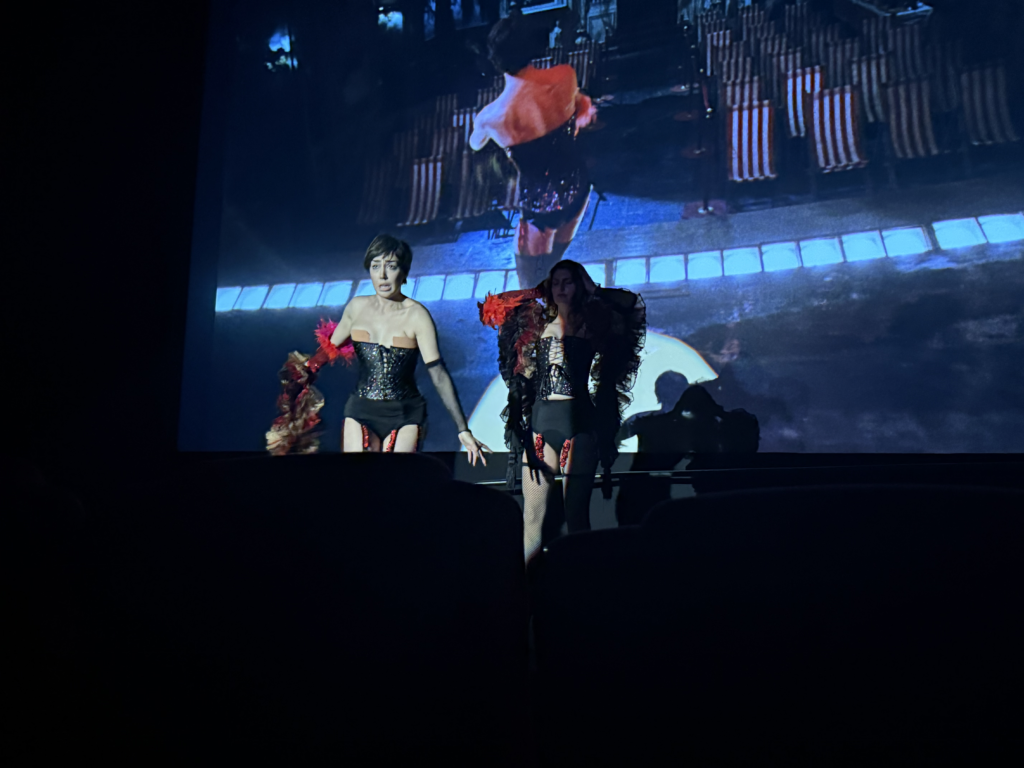
But it is important to identify some remaining representation issues. While the cast is seemingly a safe space for queer identity, I’m unsure if the same can be said about race or disability. When call-outs use homophobic language, one can be almost certain that it’s coming from a place of reclamation. But when call-outs reference race or disability, I feel less confident about the intention, even if the TRHPS fan community at large is not racist or ableist. For instance, the only role that is consistently portrayed by performers of color is Trixie, a character not present in the original film. On one hand, I wonder if this is due to the cast’s commitment to screen accuracy and the film’s lack of diversity. But on the other hand, Sins O’ the Flesh has no issues with casting gender non-conforming performers.
On another note, much of the humor regarding Dr. Everett Scott is related to him being a wheelchair-user, with the term “cripple” used frequently. I cannot definitively say if any of the performers playing the role are wheelchair-users or if the people making these call-outs are.
Overall, the stage reflects the audience. Gender is made a joke, an arbitrary boundary that the cast is more than willing to step over. Male roles are portrayed by assigned female at birth (AFAB) performers and vice versa. When I attended with a friend of mine who identifies as trans-masculine, I recall them commenting on their enjoyment of seeing a performer in the role of Brad who wore trans tape, an adhesive used to bind breasts. In my own experiences, I saw TRHPS with my rag-tag group of whoever would agree to go with me. Our preparation became ritualized. We’d ask each other, “Is this outfit Rocky Horror enough?” We’d paint our nails, we’d sing in the car. We’d hype up the experience for first-timers. We’d declare each other virgins and push each other to embarrass ourselves on stage. What mattered wasn’t the movie; it was being a part of something, and that’s what TRHPS is all about.
This piece was originally published for a Multimodal Methods in Visual Anthropology course at the University of Southern California. The Old School Catalyst editorial team thanks Rachel Barrus and Associate Professor of Anthropology Dr. Jennifer Cool for submitting it for wider publication.
This piece has been revised for clarity and length and reformatted for a digital medium.
Old School Catalyst welcomes submissions from student journalists everywhere. Contact us at oldschoolcatalyst@gmail.com for more information.