
AMSTERDAM: Since 2025, No Kings protests have become increasingly popular in the United States in the spirit of dissent against the Trump administration. But in the Netherlands, King’s Day means something entirely different. Annually on April 27, loud Dutch music blasts through the sea of orange-plastered streets in Amsterdam. People in the Netherlands take swigs of Heineken beer to commemorate the national holiday of King’s Day in honor of King William of Orange, who led the successful Dutch revolt against Spanish rule in 1568.
According to the Royal House of the Netherlands, King’s Day began as Princess’s Day in 1885 to celebrate the fifth birthday of Princess Wilhelmina, the only surviving child of King Willem III. The celebration was an initiative by liberal politicians to boost national unity and pride. The first true Queen’s Day was celebrated on August 31, 1891, a day that also came to symbolize celebrating children, as it was the last day of the summer break. Queen’s Day became an official holiday on that day in 1902, as Dutch citizens celebrated Princess Wilhelmina’s recovery from a grave illness.
Wilhelmina was succeeded by her daughter, Queen Juliana, who celebrated Queen’s Day on her birthdate, April 30. “The first time was in 1949, with the Queen and her family receiving floral tributes on the steps of Soestdijk Palace,” the Royal House of the Netherlands explains. “Crowds queued in their hundreds to present flowers and other gifts.”
When Queen Beatrix succeeded her mother, she kept Queen’s Day in April, instead of on her birthday in January, in honor of her mother— a relief for those who do not wish to party in rainy, freezing weather.
Since the current King’s ascension to the throne in 2014, King’s Day is celebrated on King Willem-Alexander’s true birthday, April 27. The celebration is known for nationwide parades, orange street decorations, live music, and all-day partying.
The 2026 King’s Day bender began the night before, known as King’s Night. The Hague’s central business district, with shops and bars, turned into a street party at around 7 p.m. DJ booths blasted techno music on different squares of the shopping district. Crowds dressed in orange flocked toward the music. The Hague’s Grote Market was transformed into a giant stage for live bands to perform.
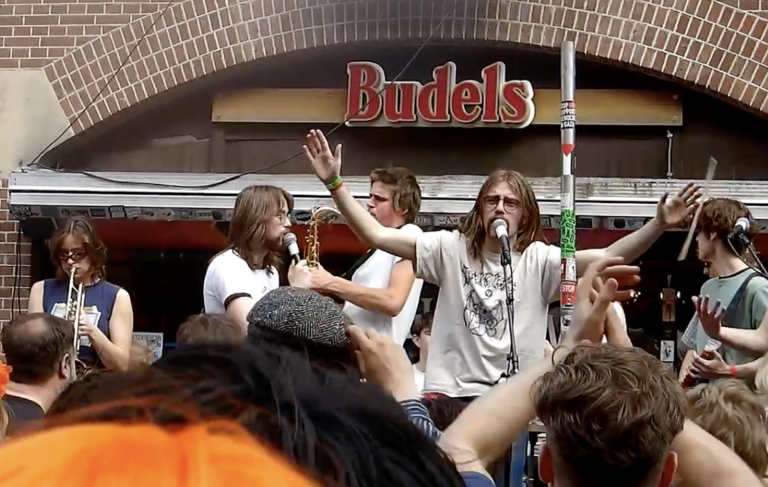
Dutch bands mainly played metal or punk rock all night. Cafe De Vink, a gay bar next to Grote Market, played classic ’80s and 2000s American club music, from ABBA’s “Voulez-Vous” to Felly and Technotronic’s “Pump the Jam.” Open container laws are not applicable to the Netherlands on King’s Night or King’s Day, and people with cheeks stamped with the colors of the Dutch flag clutched to their beers while swaying to the music.
King’s Day celebrations the next morning kicked off as early as 7 a.m. Dressed in a recently purchased orange shirt with ‘Holland’ written in the right corner, this Old School Catalyst reporter and other dedicated American study abroad students in orange bob-cut wigs ran to the train station.
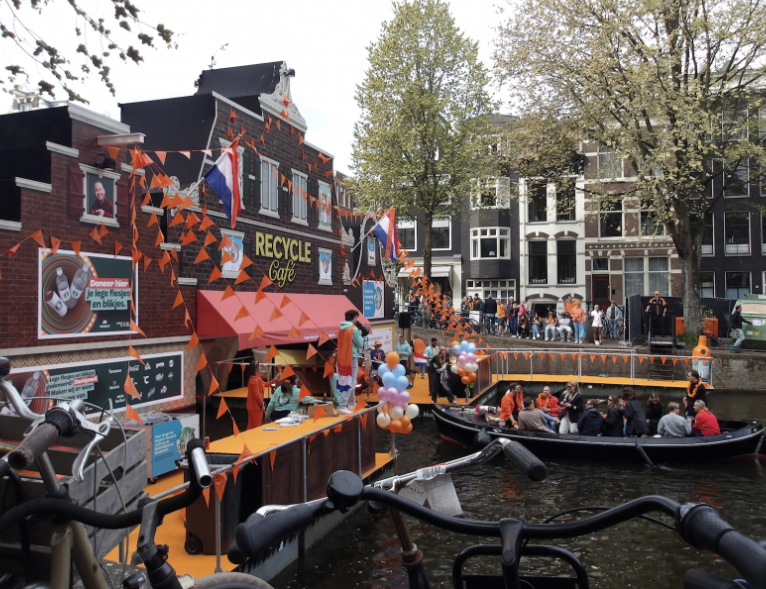
Arriving in Amsterdam at 9:30 in the morning, we found the city bustling. One woman had donned orange angel wings and several men were dressed in full orange suits.The festive mood trickled through the air like the confetti that descended every hour.
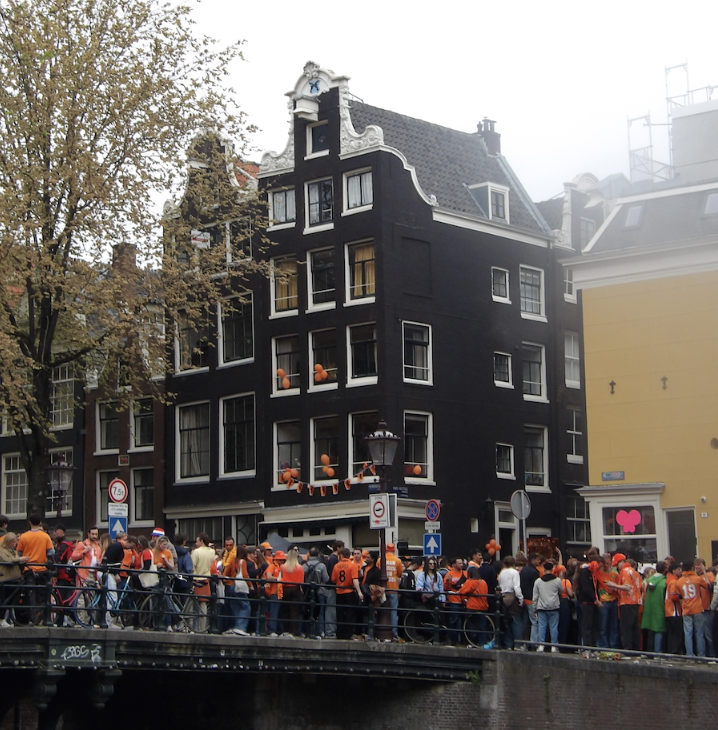
By 11 a.m., the streets were packed. Homes along the canals opened their doors and set up DJ booths on their balconies. Techno music blared from every street corner of Amsterdam’s historic Jordaan Street. One popular set filled with Dutch partiers displayed an orange banner that read, “Willem is King, but I’m the one she’s actually bowing for.”
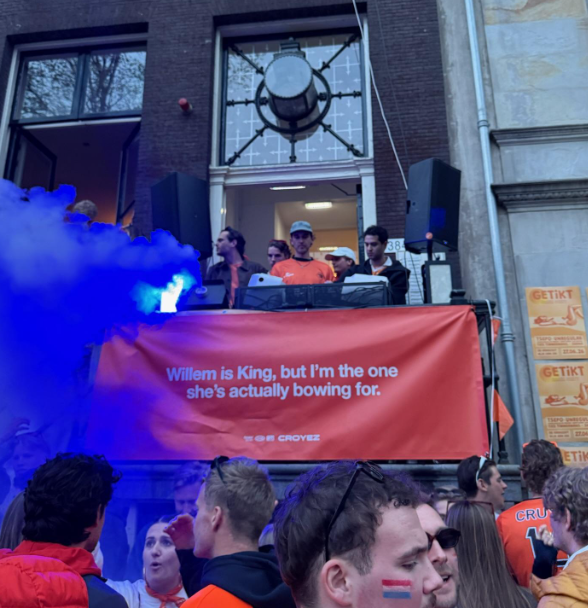
King’s Day is also known for its free markets, where anyone can sell anything without a permit. Clothing, kitchen appliances and even refrigerators sat by people’s homes for sale. Fold-up tables selling five euro beers and bottled water stood on streets littered with empty cans and cigarettes.
Dancing in a mosh-pit-like crowd, everyone embraced the free party spirit of the holiday.
“King’s Day is the best time of the year,” an Amsterdam resident originally from Geneva told Old School Catalyst.
According to this partygoer, the 2026 King’s Day celebration had stricter boating laws in place. Normally, the canals are filled to the brim with boats decorated in orange and blasting music. The Dutch government, concerned about congestion and safety, stated that only 12 people plus a skipper would be permitted on boats during King’s Day.
Yet there was still Dutch decorum. During one of the DJ sets, a fight broke out. The music stopped and people collectively booed until the fighting men left. As soon as they did, the music resumed and people danced like nothing had happened.
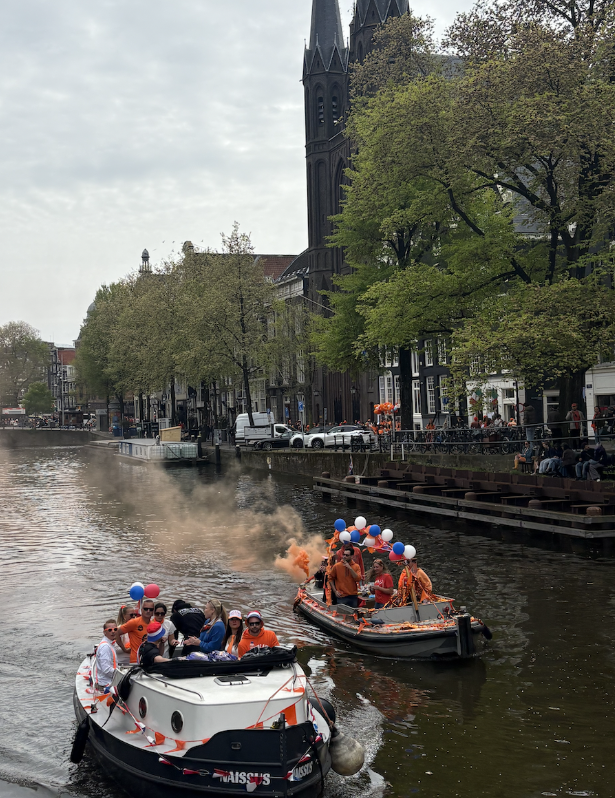
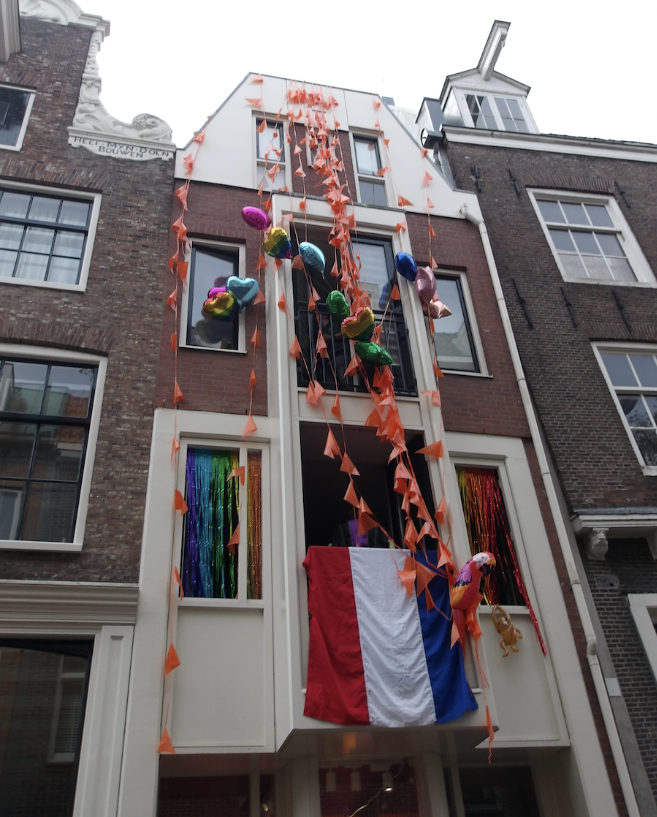
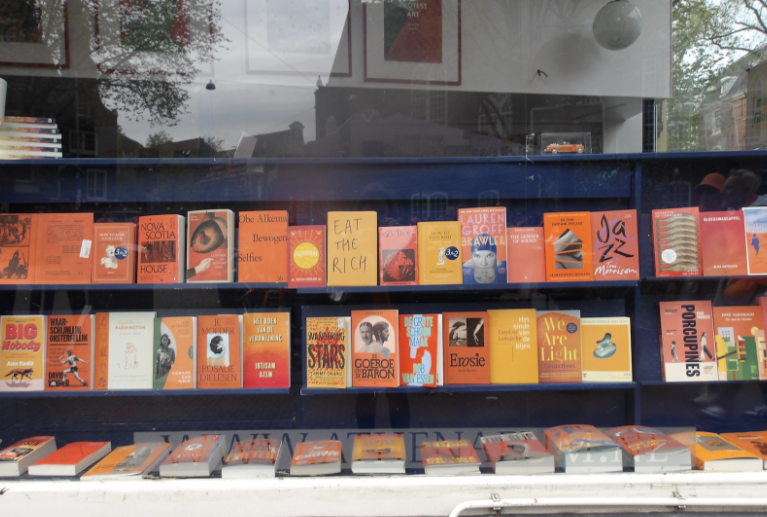
The streets sprawled with people dancing or eating food purchased from the various street food vendors. Bars lined with crowded tables of patrons dressed in orange hats and leis. Orange balloons were tied around houses and red, blue and white streamers hung down from balconies. Homeowners had the best view, with many seated on the edge of their windows and holding speakers or posters, or enjoying the view as passersby below danced for hours and hours. One popular display was a bookstore that showcased all of their orange books.
This reporter did not leave Amsterdam until 9:50 p.m., meaning a 12-hour King’s Day—and Europeans joke that Americans do not know how to party. King’s Day was a fabulous all-day event that gave this American an up-close look at Dutch culture and pride. Amid such divisive times, it was a beautiful thing to witness Dutch strangers bobbing their heads and shaking their hips all together.